

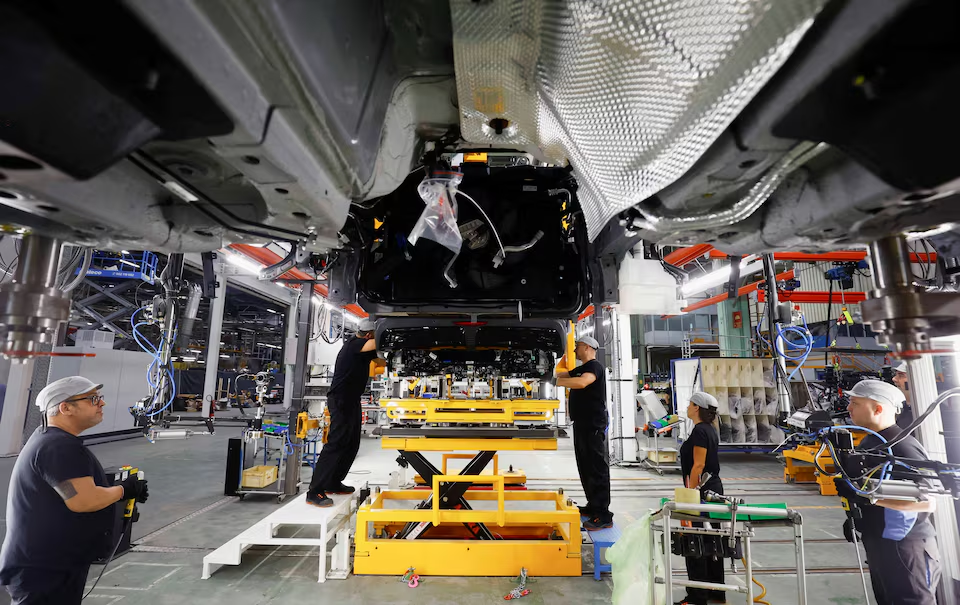
The push towards a sustainable future has gained significant momentum across various industries, especially within the automotive industry. Governments worldwide have set ambitious goals to drastically reduce carbon emissions, with 2035 often highlighted as a critical milestone. However, recent developments indicate that the automotive parts industry is voicing substantial concerns regarding these targets, advocating for a more pragmatic and attainable approach. This discussion explores the reasons behind the industry’s stance, the implications of hard zero-emission goals, and potential pathways toward balanced progress.
The Context of the 2035 Zero-Emission Goals
Climate change has become an urgent global issue, prompting policymakers to initiate aggressive measures aimed at reducing greenhouse gases. Among these efforts, the transportation sector is under considerable pressure due to its significant contribution to carbon emissions. As a result, many countries and international bodies have announced plans to ban or phase out internal combustion engine (ICE) vehicles, pushing the automotive industry toward electric vehicles (EVs) and zero-emission alternatives.
Specifically, the target year 2035 has emerged as a pivotal deadline for phasing out traditional engines, encouraging automakers to accelerate their development and deployment of EVs. Such policies aim not only to meet climate targets but also to stimulate innovation, job creation in new energy sectors, and technological advancements in clean transportation.
Industry Concerns and Why the Automotive Parts Sector Advocates for Adjustment
Challenges in Material Supply and Manufacturing
The industry’s push for a lowered timeline stems from several operational and logistical hurdles:
- Supply Chain Limitations: The transition to electric vehicles demands a massive overhaul of supply chains, especially for critical components like batteries, rare earth metals, and specialized manufacturing equipment. Rapid scaling up could strain existing resources, leading to shortages and increased costs.
- Technological Readiness: While EV technology has advanced significantly, certain components—such as batteries with longer range, faster charging capabilities, and improved safety features—still face developmental challenges.
- Workforce and Infrastructure Constraints: Transitioning requires retraining workers, establishing new manufacturing facilities, and expanding charging infrastructure—processes that are complex and time-consuming.
Economic Impact and Industry Viability
The economic repercussions of stringent zero-emission targets are also a vital concern:
- Cost Implications: Achieving net-zero emissions by 2035 could lead to increased vehicle prices, potentially reducing consumer adoption rates in the near term.
- Competitive Disadvantages: Countries or regions with stricter timelines may face economic disadvantages if manufacturers are unable to meet demands without incurring hefty costs.
- Impact on Smaller Suppliers: Smaller automotive parts manufacturers might struggle to adapt, risking job losses and industry contraction.
The Case for Lower, More Realistic Targets
The automotive parts industry emphasizes the importance of setting phased, achievable goals that consider current technological, economic, and infrastructural realities. They argue that lowering or extending the 2035 target will enable a smoother transition, fostering innovation and ensuring industry sustainability.
Balanced Approach for Sustainable Progress
Rather than immediate and absolute bans, experts suggest adopting a step-by-step strategy that includes:
- Incremental emission reduction targets that gradually decrease over time, giving industries space to innovate without risking economic fallout.
- Investment in R&D to improve batteries, alternative fuels, and vehicle efficiency, thereby making zero-emission vehicles more accessible and affordable.
- Infrastructure development to support EV adoption, such as expanding charging stations and upgrading grid capacities.
- Policy incentives that encourage manufacturers and consumers towards cleaner transportation options.
Global Perspectives and Comparative Policies
Different countries adopt varying policies based on their economic strengths, technological capabilities, and environmental priorities. For instance, while the European Union has announced aggressive timelines for phasing out ICE vehicles, other regions like the United States and parts of Asia are considering more gradual approaches. Understanding these diverse strategies underscores the necessity of tailored policies that align with regional realities.
Lessons from Past Transitions
The automotive industry’s transition from traditional engines to electric vehicles is comparable to previous technological shifts, such as the move from manual to automatic transmissions or the adoption of hybrid vehicles. Historical evidence suggests that overly aggressive targets can hamper innovation and market acceptance, highlighting the need for pragmatic policies.
Potential Benefits of Moderated Targets
- Enhanced technological development: More time allows for breakthroughs in battery technology, alternative fuels, and manufacturing techniques.
- Reduced economic disruption: A phased approach minimizes job losses, supports existing supply chains, and attracts investments.
- Greater consumer acceptance: Affordable and reliable zero-emission vehicles are more likely to penetrate the market if introduced gradually.
- International cooperation: Countries can learn from each other and develop synchronized strategies that consider global market dynamics.
Conclusion: Striking a Balance for the Future
The automotive industry’s call for lowering or extending the 2035 zero-emission target reflects a pragmatic response to current technological, economic, and infrastructural challenges. While the push for cleaner transportation remains unwavering, ensuring a sustainable transition requires policies that balance ambition with realism. By embracing a phased approach, stakeholders can foster innovation, maintain industry viability, and ultimately achieve the shared goal of a sustainable, low-carbon future.
As the industry navigates these complex changes, collaboration between governments, manufacturers, and consumers will be crucial. Policies must be adaptable, evidence-based, and inclusive, ensuring that progress is equitable and achievable for all involved.
For more updated news please keep visiting Hourly Prime News.