

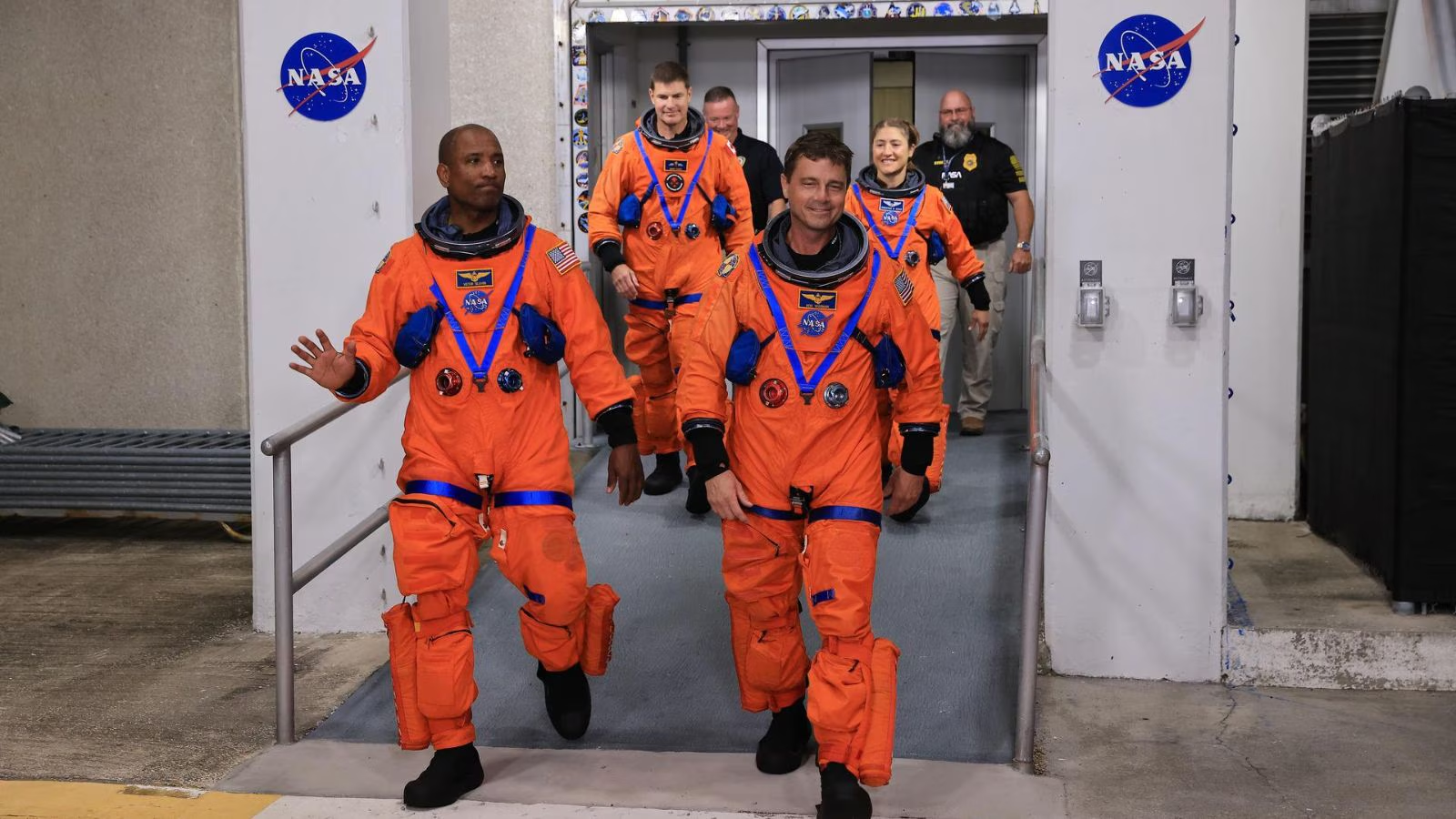
NASA is gearing up for one of the most ambitious missions in human spaceflight history with the upcoming Artemis 2 mission, scheduled for launch in early 2026. This mission marks a significant milestone as it aims to return humans to the Moon after more than half a century, rekindling the spirit of exploration that once pushed astronauts beyond Earth’s orbit. The Artemis program, named after the twin sister of Apollo and goddess of the Moon in Greek mythology, is poised to redefine humanity’s presence on the lunar surface, with plans that extend beyond a single visit.
Historical Context and the Significance of Artemis 2
Since the end of the Apollo era in the 1970s, humans have not set foot on the Moon, leaving a void in lunar exploration. NASA’s Artemis program promises to change that. Artemis 2 will be the first crewed mission of the new Artemis series, featuring astronauts orbiting the Moon without landing. This strategic step aims to test the Space Launch System (SLS) and the Orion spacecraft under real mission conditions, ensuring reliability before the subsequent lunar landing missions.
Why is Artemis 2 so crucial? It offers a critical opportunity to validate the spacecraft systems, navigation, and life-support mechanisms that will carry humans farther than ever before. This mission also serves as a prelude to Artemis 3 and beyond, setting the stage for sustained lunar presence and eventually, human missions to Mars.
Technological Preparations and Mission Goals
Central to Artemis 2 is the powerful Space Launch System (SLS), the most potent rocket NASA has developed in decades. Coupled with the Orion spacecraft, it is designed to carry astronauts safely beyond low Earth orbit. The mission’s primary objectives are:
- To demonstrate the integrated system performance of SLS and Orion with crew onboard during a lunar flyby.
- To evaluate life-support and onboard systems in the space environment surrounding the Moon.
- To gather critical data on spacecraft re-entry and splashdown procedures.
Unlike Artemis 1, which was an uncrewed test flight, Artemis 2 will include a crew of astronauts onboard, marking a historic human spaceflight milestone since the Apollo missions.
The Astronauts: Guardians of the Mission
The upcoming cache of NASA’s astronaut candidates is fresh with talent and experience, comprising individuals from diverse backgrounds including geologists, former SpaceX launch directors, and commercial astronauts. These pioneering explorers will undertake rigorous training to prepare for lunar orbit and beyond.
Meet NASA’s 10 new astronaut candidates: They bring expertise from various disciplines and are selected for their ability to handle complex missions that demand resilience, technical skill, and adaptability. Their participation signals NASA’s commitment to fostering a new generation of space explorers capable of pushing the boundaries of human spaceflight.
Challenges and Expectations
The Artemis 2 mission is not without challenges. Developing reliable deep-space navigation, ensuring astronaut safety during extended lunar orbit, and managing the logistical complexities of crewed missions in lunar environments are formidable tasks. Engineers and scientists continue to work diligently on:
- Perfecting life support systems that can sustain astronauts for days or weeks.
- Mitigating radiation exposure in deep space.
- Designing sustainable systems for potential lunar habitats and bases in subsequent missions.
Despite these hurdles, NASA’s mission planners are optimistic. Significant progress has already been made, and the countdown to the launch in early 2026 is gaining momentum. This timeline aligns with international cooperation and commercial partnerships, expanding the scope and reach of lunar exploration.
Global and Commercial Involvement
The Artemis program heralds a new era of international collaboration. Countries like Canada, Europe, Japan, and other partners are contributing in various ways, including technology, logistics, and science payloads. Moreover, commercial aerospace companies, including SpaceX and Blue Origin, are actively involved in supporting NASA’s lunar explorations, offering innovative solutions for launch, lunar landers, and habitat modules.
This collaboration reflects a transition from government-only space exploration towards a more inclusive, multi-stakeholder approach. It also fosters the growth of the commercial space industry, enabling more frequent and cost-effective missions beyond Earth’s orbit.
Implications for Humanity’s Future
The successful execution of Artemis 2 will set a precedent for future missions that aim to establish a sustainable human presence on the Moon. With technological advancements and international cooperation, NASA envisions:
- A permanent lunar base that serves as a stepping stone for Mars missions.
- The development of commercial lunar activities such as mining and scientific research.
- Enhancing our understanding of lunar geology, resources, and environment to support long-term habitation.
These endeavors will also drive innovation, inspire generations, and expand humanity’s reach into the cosmos.
Looking Ahead: The Next Steps in Lunar Exploration
Following Artemis 2, NASA plans to proceed with Artemis 3, targeting a lunar landing around 2026 or shortly thereafter. Artemis 3 will be a historic crewed landing, potentially involving the first woman and the next man setting foot on the lunar surface since Apollo 17.
Furthermore, NASA’s Artemis program aims to establish a sustainable presence on the Moon, with the development of lunar gateways, habitats, and resource utilization technologies, paving the way for future interplanetary exploration.
Conclusion
The Artemis 2 mission represents not just a technical achievement but also a symbol of human perseverance and curiosity. As humanity prepares to revisit the Moon in early 2026, the world watches with anticipation, eager to witness the next chapter of space exploration unfold. This mission exemplifies the spirit of discovery, pushing us closer to answering profound questions about our universe, our origins, and our future as a spacefaring species.
For more updated news please keep visiting Hourly Prime News.