

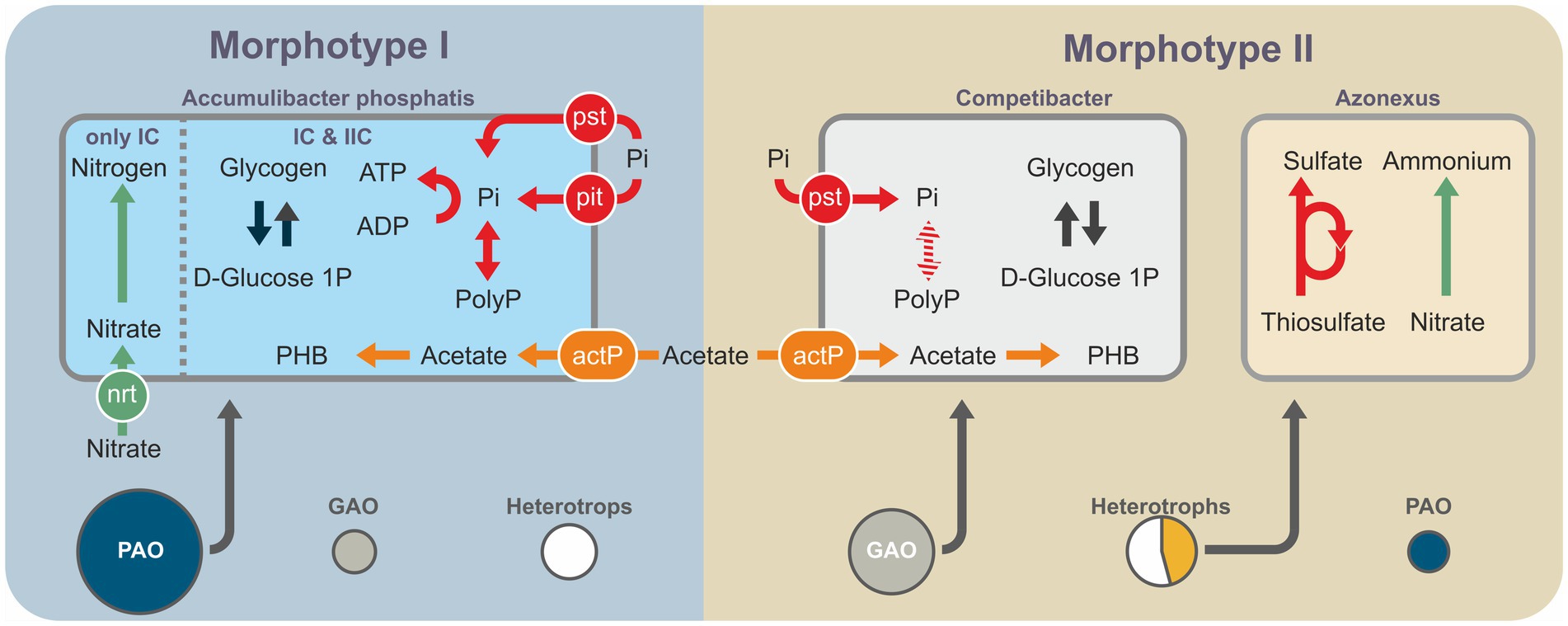
The microbial world is a fascinating realm of complex interactions, especially within engineered ecosystems like wastewater treatment plants. Among the various microbial players, Candidatus Accumulibacter has garnered significant attention due to its pivotal role in enhanced biological phosphorus removal (EBPR). Recent advances in metaproteomics have shed light on the intricate secretome profiles of granule-forming Ca. Accumulibacter enrichments, offering novel insights into their functional mechanisms and environmental interactions.
Understanding the Role of Ca. Accumulibacter in Wastewater Treatment
Ca. Accumulibacter is renowned for its ability to accumulate polyphosphate within intracellular inclusions, earning it the designation of a phosphate-accumulating organism (PAO). Its activity is essential in removing excess phosphorus from wastewater, preventing eutrophication in natural water bodies. The bacteria thrive in granule communities, forming dense bioaggregates that effectively facilitate nutrient removal processes.
The secretogenic activity of Ca. Accumulibacter—that is, the proteins secreted into the surrounding environment—is of particular interest. The secretome not only mediates interactions between cells but also influences the structural integrity of granules, nutrient exchange, and resistance to environmental stresses.
Metaproteomics: A Window into the Secretome Landscape
What is Metaproteomics?
Metaproteomics is the large-scale study of all proteins expressed by microbial communities within an environment. It allows researchers to explore not just which microbes are present, but also what functions they are performing at any given time. This approach is especially powerful in understanding complex bioaggregates like those formed by Ca. Accumulibacter.
Profiling the Secretome of Granule-Forming Ca. Accumulibacter
The recent study, as published on Wiley Online Library, utilized advanced metaproteomic techniques to characterize the secretome of a granule-forming Ca. Accumulibacter enrichment. The goal was to identify key proteins involved in granule stability, metabolic pathways, and environmental adaptation.
Key findings from this comprehensive profiling include:
- Identification of Structural Proteins: These proteins contribute to the physical robustness of granules, facilitating aggregation and stability under varying environmental conditions.
- Enzymes Involved in Phosphorus Cycling: The presence of enzymes that actively participate in polyphosphate metabolism underscores the dynamic nature of phosphorus accumulation and release within granules.
- Proteins Mediating Stress Response: Secreted stress response proteins suggest mechanisms by which Ca. Accumulibacter withstands oxidative stress, nutrient fluctuations, and toxic shocks.
- Communication and Signaling Molecules: The detection of signaling proteins highlights communication pathways vital for community-level coordination and biofilm formation.
Implications of Secretome Profiling for Wastewater Treatment Optimization
Understanding the secretome of Ca. Accumulibacter has profound implications for enhancing wastewater treatment processes. By identifying proteins critical for granule formation and stability, engineers can devise strategies to promote optimal microbial consortia development. This knowledge can translate into:
- Improved Granule Integrity: Enhancing production of structural proteins could lead to more resilient bioaggregates that perform consistently under operational stresses.
- Targeted Bioaugmentation: Introducing specific microbial strains or enzymes based on secretome insights can accelerate granule formation or improve phosphorus removal efficiency.
- Stress Management: Developing approaches to bolster stress response mechanisms helps maintain stability during influent variability or toxic shocks.
- Reduced Operational Costs: Optimized microbial communities reduce the need for chemical additives and minimize process failures.
Future Directions in Metaproteomic Research on Ca. Accumulibacter
While current studies provide valuable snapshots of the secretome, ongoing research aims to track how secretome compositions change over time, under different operational conditions, and in response to environmental stressors. Integrating metaproteomics with genomics, transcriptomics, and metabolomics will offer a holistic view of Ca. Accumulibacter ecology and functionality.
Future research may also focus on:
- Engineering of Synthetic Consortia: Creating tailored microbial communities with optimized secretome profiles for enhanced phosphorus removal.
- Protein Engineering: Designing enzymes based on secretome proteins to improve their activity, stability, and specificity.
- Real-time Monitoring: Developing biosensors capable of detecting secretome proteins to assess bioreactor health in real-time.
Conclusion
The metaproteomic exploration of Ca. Accumulibacter secretome has unlocked a nuanced understanding of its functional capabilities within granular biofilms. These insights are not only academically enriching but also hold practical significance for the future of sustainable wastewater management. By harnessing the power of proteomic profiling, operators and researchers can design smarter, more resilient biological treatment systems, ultimately contributing to cleaner water resources and environmental health.
As we continue to delve into the microbial secretome, it becomes increasingly clear that these tiny entities play outsized roles in our ecosystems and industries. The ongoing integration of omics technologies will undoubtedly propel innovations and deepen our comprehension of microbial community dynamics.
For more updated news please keep visiting Hourly Prime News.