

Unveiling Jezero Crater: NASA’s Discovery of Ancient Martian Life Potential Unveiling Jezero Crater: NASA’s Discovery of Ancient Martian Life Potential Introduction: The Martian Enigma and Jezero Crater’s Significance For decades, humanity’s curiosity about life beyond Earth has driven scientists and space agencies to explore the Red Planet. Central to this quest is understanding whether Mars ever held conditions suitable for life. Among the many geological features on Mars, the Jezero Crater stands out as a captivating site that may hold the key to unlocking this mystery.
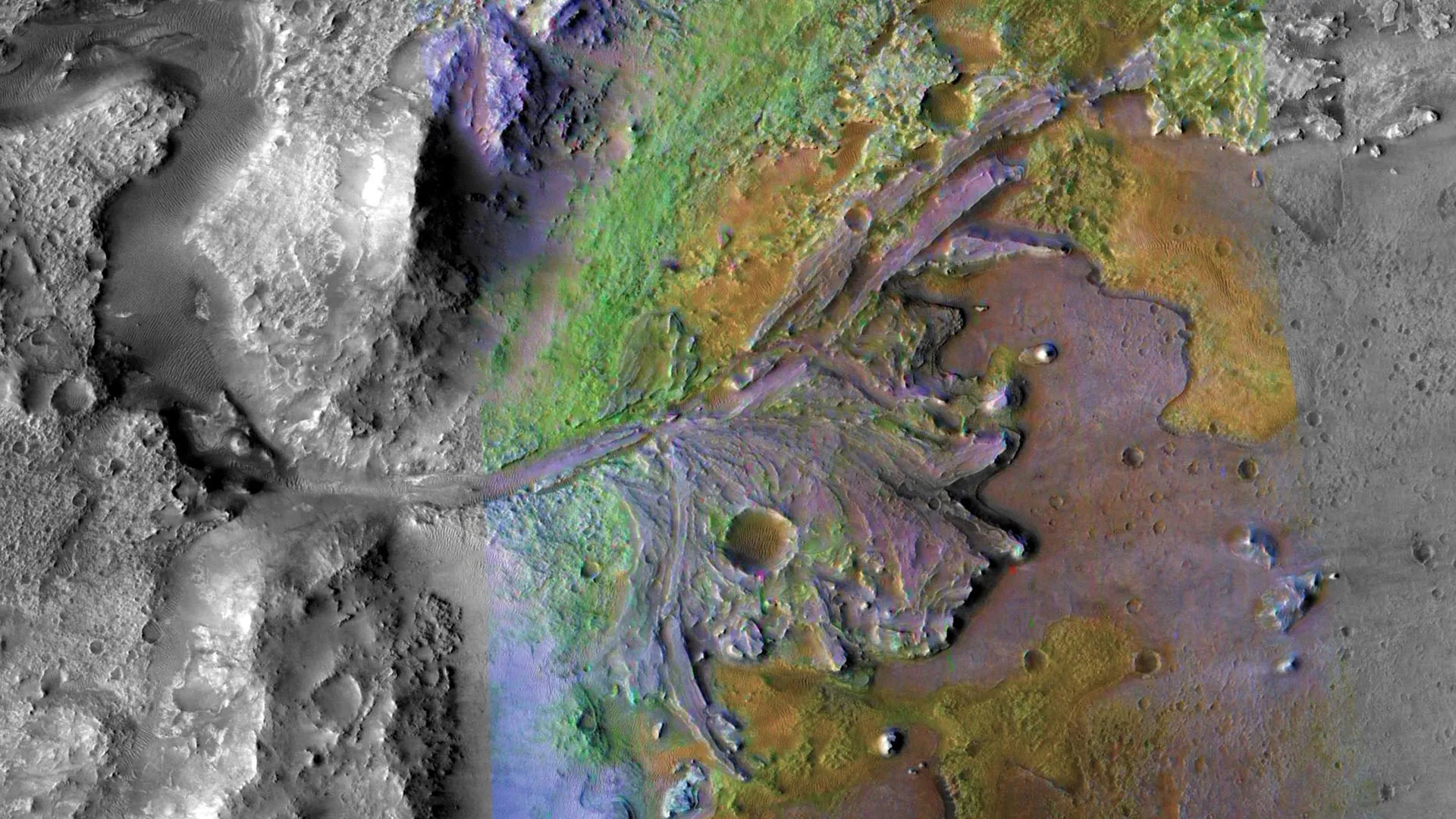
NASA’s recent investigations of this ancient site have propelled the planet into the spotlight, raising hopes of potential biosignatures and shedding light on Mars’s intriguing past. The Geology and History of Jezero Crater Jezero Crater, roughly 45 kilometers in diameter, is a compelling geological marvel because it appears to have hosted water in the distant past. Evidence suggests that the crater was once filled with a large lake, fed by inflowing rivers that created a delta—a region rich in sedimentary deposits that are ideal for fossil and biosignature preservation.
The mineralogical composition of Jezero reveals signatures of clay minerals and sulfates, which form in aqueous environments and are considered promising indicators of potential habitability. This ancient lake environment, dating back over 3.5 billion years, offers a window into Mars’s early climate and geological processes. The sedimentary deposits within the delta and surrounding plains serve as natural archives, carrying the chemical and physical clues that could indicate past life or its building blocks. NASA’s Rover Missions and Groundbreaking Discoveries The Perseverance Rover’s Role in Exploring Jezero NASA’s Perseverance rover, landed inside Jezero Crater in 2021, is at the forefront of this exploration.
Equipped with advanced scientific instruments, Perseverance aims to analyze rocks and soil to search for biosignatures—indicators of past life. Recent findings suggest that Perseverance has detected potential biosignatures, such as specific mineral and organic associations that could be remnants of ancient microbes. Moreover, the rover has uncovered redox-driven mineral formations, which occur in environments with fluctuating oxidation states—a hallmark of many life-supporting habitats on Earth. These mineralogical features point towards a once habitable environment where microbial life could have thrived. Significance of Biosignatures in Mars Exploration Biosignatures—molecular or mineralogical evidence of past biological activity—are the holy grail of planetary science.
The detection of potential biosignatures on Mars would provide unprecedented proof that life once existed there. The recent discoveries in Jezero Crater significantly bolster this possibility, indicating that Mars’s ancient environment was more Earth-like than previously thought. Scientific Findings and Their Implications Organic Material and Mineral Associations Research published in Nature highlights the presence of redox-driven mineral and organic associations within Jezero Crater. These associations suggest ongoing or past chemical reactions driven by microbial activity, possibly preserving organic molecules—precursors to life.
Such findings are crucial because organic molecules are fundamental to all known life forms on Earth and could offer clues to life’s origins on Mars. Potential Biosignatures Detected In a groundbreaking announcement, NASA indicated that the Perseverance rover discovered potential biosignatures last year. These signals include mineralogical formations and organic compounds that resemble patterns formed by life processes on Earth. While definitive proof remains elusive, these signals invigorate the scientific community’s hope that Mars once hosted life. How Jezero Crater Compares with Other Mars Sites Age and Environmental Conditions: Jezero’s age and sedimentary history make it uniquely suited for habitability, unlike other sites with more recent or less water-related geology.
Preservation Potential: The delta deposits and clay minerals found here provide excellent preservation conditions for biosignatures, surpassing many other regions on Mars. Accessibility for Sample Return: Jezero’s geological features allow for easier sampling and potential return to Earth for detailed analysis, accelerating our understanding of Martian life potential. The Future of Mars Exploration and Human Interest NASA and other space agencies are planning future missions that could bring Mars samples back to Earth for comprehensive laboratory testing. The role of Jezero Crater will remain pivotal in these endeavors because of its high potential for preserving evidence of early life.
Additionally, understanding the planet’s ancient habitability offers crucial insights into planetary evolution and the possibility of life elsewhere in the universe. Challenges and Cautions in the Search for Life Despite promising discoveries, scientists emphasize caution. Detecting biosignatures on Mars doesn’t necessarily confirm life; it might also result from abiotic chemical processes. Researchers are actively refining methodologies to distinguish between biological and non-biological signatures, ensuring scientific rigor in interpreting findings. Furthermore, contamination risks and the technical challenges of remote detection remain hurdles in this complex search.
Impacts on Astrobiology and Our Cosmic Perspective The recent focus on Jezero Crater invigorates arguments that life could have emerged in environments quite different from Earth’s current conditions. It broadens our understanding of where and how life can exist, bolstering the hypothesis that life might be common throughout the cosmos. Moreover, uncovering even potential biosignatures fuels philosophical and scientific debates about our place in the universe and the possibilities of extraterrestrial life. Conclusion: A New Dawn for Mars Science Jezero Crater, with its ancient lakebed and preserved sedimentary record, continues to be a focal point in the quest to uncover Mars’s secrets. NASA’s discoveries of potential biosignatures and organic compounds kindles hope that we are on the cusp of one of humanity’s most profound scientific breakthroughs: confirming that life once existed beyond Earth. The ongoing exploration is a testament to human curiosity and the relentless pursuit of knowledge about our universe.
As technology advances and next-generation missions are planned, the secrets of Jezero Crater may soon transform from tantalizing clues into definitive evidence. The quest to understand Mars’s habitability not only enriches our scientific wisdom but also inspires generations to look up at the Martian skies with new wonder and determination. For more updated news please keep visiting Hourly Prime News.