

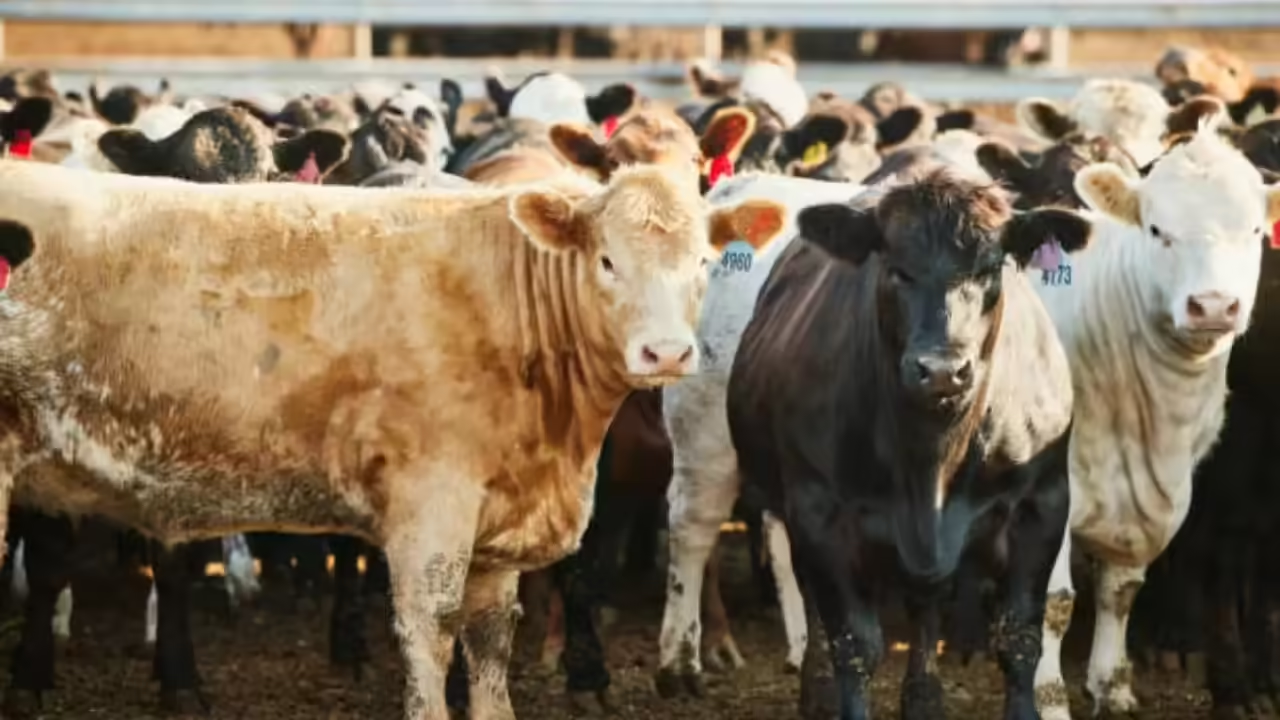
In recent years, the conservation community and cattle farmers have increasingly explored innovative methods to protect livestock from natural predators, especially wolves. Traditional deterrent tools such as fences and guard animals have their limitations, prompting researchers and biologists to develop more high-tech and creative strategies. One such groundbreaking method involves leveraging drones equipped with sound and visual deterrents, including heavy metal music and Hollywood clips. This approach, as reported by CBS News, demonstrates a novel intersection of technology and animal behavior management that could revolutionize livestock safeguarding efforts.
The Rise of Drone Technology in Wildlife Management
Unmanned aerial vehicles, better known as drones, have transitioned from military and hobbyist gadgets to versatile tools for environmental monitoring, research, and conservation. Their ability to access remote or rugged terrains with minimal disturbance makes them ideal for addressing complex challenges in wildlife management. In recent studies and field trials, drones have shown promise not only for surveillance but also for actively deterring predators from livestock areas.
The deployment of drones in livestock protection typically involves equipping them with loudspeakers or integrating sound systems that broadcast specific noises intended to repel wolves. In addition, visual deterrents like flashing lights or screens playing aggressive or unfamiliar visual content add an extra layer of repulsion. The use of rock, metal, and Hollywood movie clips capitalizes on the natural instincts of wolves, which are wary of unfamiliar or threatening stimuli.
How Heavy Metal and Hollywood Clips Function as Deterrents
Understanding Animal Response to Sound and Visual Cues
Animals, especially predators like wolves, rely heavily on auditory and visual cues in their environment. Sudden loud noises or unfamiliar visuals can trigger avoidance behaviors. Heavy metal music, known for its loud, intense, and sometimes chaotic sound, mimics the sounds of predator calls or environmental disturbances that wolves find unsettling. Similarly, Hollywood movie clips—often featuring scenes of chaos, danger, or aggressive animals—serve as visually and aurally stimulating signals that trigger flight responses.
According to research published by CBS News, biologists have found that broadcasting heavy metal tracks combined with intense or alarming Hollywood clips results in a significant reduction in wolf presence around cattle herds. The auditory shock combined with startling visuals creates a “fear factor” that dissuades wolves from approaching, reducing the risk to livestock significantly.
The Field Application and Effectiveness of the Approach
Case Studies and Findings
This innovative deterrent system was tested in various settings, employing drones that hovered over cattle grazing fields, broadcasting targeted audio-visual content. The results were promising:
- Decreased Wolf Incursions: Farms utilizing this method saw a notable drop in wolf intrusions, reducing cattle losses and stress.
- Cost-Effective and Non-Lethal: Unlike culling, which faces ethical and ecological criticism, this approach offers a humane solution for livestock protection.
- Adaptive and Scalable: The system can be customized with different sound and image combinations, tailored to specific predator behaviors or environmental conditions.
Practical Considerations
While promising, the technology does come with operational considerations:
- Battery Life and Drones’ Range: Ensuring drones can operate long enough for continuous deterrence, especially in large grazing areas.
- Sound Management: Balancing loudness to be effective without disturbing surrounding communities or wildlife.
- Legal and Ethical Aspects: Abiding by regulations regarding airborne devices and noise emissions.
The Future of Livestock Protection: Combining Technology and Ecology
As drone technology advances, integrating AI-driven behaviors and automated responses could further enhance predator deterrence. For instance, drones could be programmed to track wolf movements in real-time, deploying specific deterrents as needed. Additionally, ongoing research aims to refine the audio and visual content to maximize impact while minimizing potential negative effects on domestic animals and humans.
This blending of wildlife behavioral science, drone technology, and creative deterrent strategies highlights a sustainable path forward—one that respects ecological balances and promotes humane livestock management. It also exemplifies how cross-disciplinary innovations can tackle age-old conflicts between humans and predators, reducing the need for lethal interventions.
Conclusion
The use of drones blasting heavy metal and Hollywood clips as a predator deterrent offers a fresh, effective tool for farmers and conservationists. It reflects a larger trend towards harmonious coexistence with wildlife, utilizing technology in thoughtful and strategic ways. While further research and development are required to optimize these systems, the initial success stories are encouraging a shift away from destructive methods towards humane, technologically-advanced solutions.
As technology continues to evolve, expect to see more integrated approaches combining sound, visuals, and autonomous drone responses to safeguard livestock and preserve ecological integrity.
For more updated news please keep visiting Hourly Prime News.