
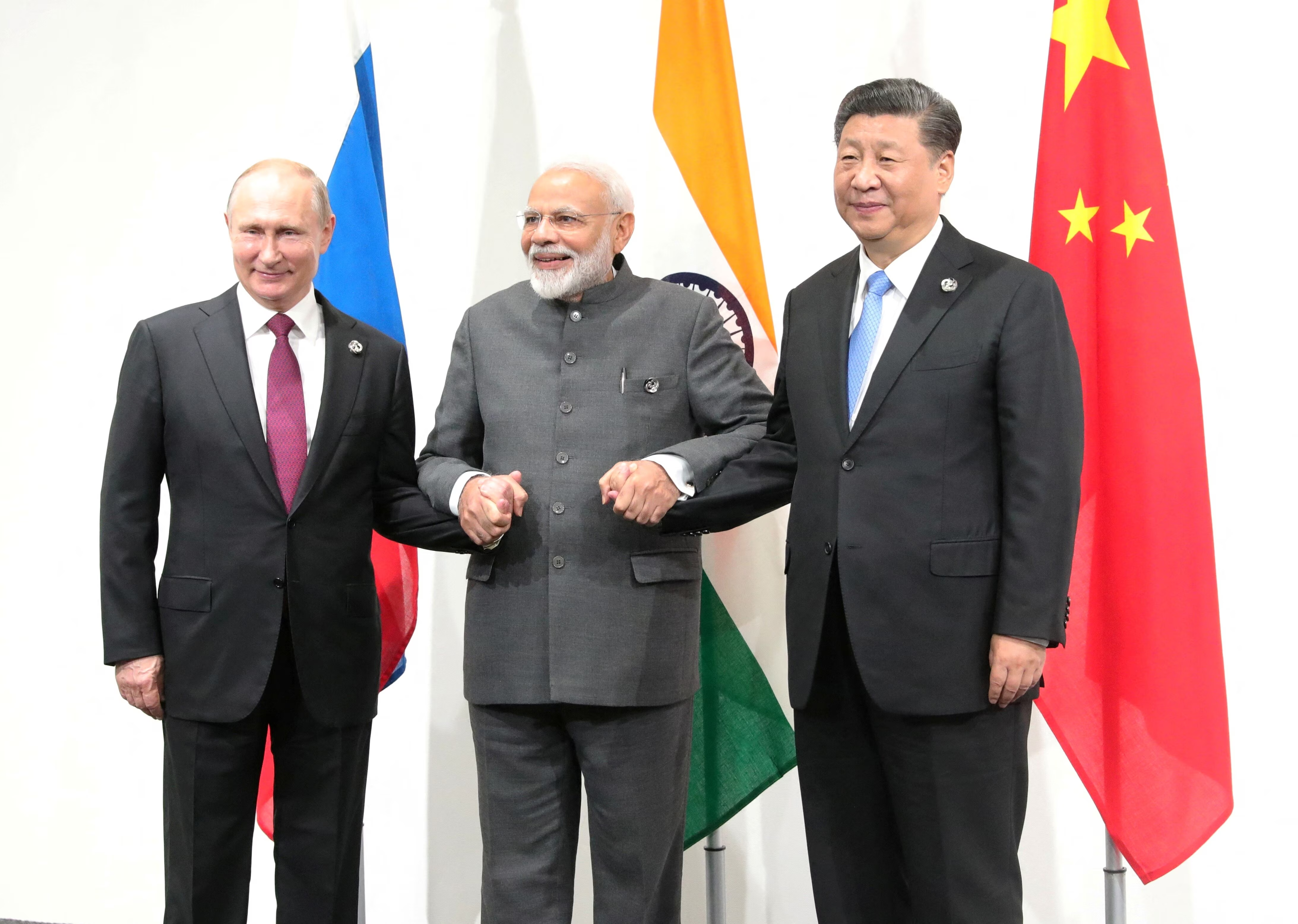
The Shanghai Cooperation Organization (SCO) Summit 2025 promises to be a milestone event with significant implications for global geopolitics, trade policies, and economic strategies. As the world’s major powers converge—India, China, and Russia—questions loom over whether this trilateral alliance can influence, or even set the tone for, US trade policies, particularly Donald Trump’s approach to tariffs. In an era marked by shifting alliances and economic realignments, the SCO Summit could serve as a critical platform for member countries to showcase their collective influence, challenge American dominance, and redefine regional dynamics.
The Context: Understanding the SCO’s Strategic Significance
The SCO, initially founded in 2001 as a regional security bloc, has gradually transformed into a multifaceted organization engaging in economic cooperation, political dialogue, and international security. Its member states—India, China, Russia, Pakistan, and several Central Asian nations—represent nearly half of the world’s population and a substantial portion of global GDP. This makes SCO a formidable consortium capable of impacting global economic trajectories.
In recent years, the SCO’s objectives have expanded beyond security, aiming to foster economic integration and counterbalance Western-centric influence. With initiatives like the Digital Silk Road and increased regional infrastructural projects, the bloc’s economic footprint is expanding rapidly. Therefore, any cooperation or consensus emerging from SCO 2025 could have profound implications for global trade, especially in the context of escalating US tariffs and trade disputes.
India, China, Russia: A Triangular Powerplay
India’s Growing Global Ambitions
India’s role within the SCO has grown substantially, reflecting its desire to diversify its international partnerships beyond traditional Western alliances. As a fast-growing economy with a strategic focus on regional stability, India advocates for a multipolar world where power balances are decentralized. Its participation in SCO discussions often emphasizes regional connectivity, trade facilitation, and infrastructure development.
China’s Belt and Road and Economic Diplomacy
China’s influence within the SCO is undeniable, driven by initiatives like the Belt and Road Initiative (BRI). The country seeks to expand its regional influence, promote Chinese standards and infrastructure projects, and secure new markets. China’s approach is often seen as an attempt to circumvent Western sanctions and tariffs by creating alternative economic corridors.
Russia’s Strategic Position
Russia views the SCO as a strategic tool to reassert its influence regionally and globally. With its focus on energy exports, military cooperation, and regional stability, Russia hopes to leverage SCO membership to counter NATO and Western economic pressures. It is increasingly vocal about creating independent economic corridors and reducing reliance on Western financial systems.
The convergence of these three nations within SCO sets the stage for a possible cooperative front that may challenge US trade policy strategies, especially tariffs aimed at reshaping global supply chains or exerting economic pressure.
Will SCO 2025 Brew Trump’s Tariffs? Key Factors at Play
Geopolitical Disputes and Economic Shields
One of the primary questions is whether the SCO summit will serve as a platform to develop an economic shield against US tariffs. Given the recent escalation of US-China tensions and America’s aggressive tariffs under the Trump administration, member countries are exploring ways to insulate themselves from economic coercion. These strategies include:
- Regional Payment Systems: Developing alternative financial channels to bypass SWIFT and US sanctions.
- Trade Diversification: Strengthening intra-SCO trade to reduce reliance on Western markets.
- Shared Infrastructure Projects: Enhancing connectivity among member states for smoother trade flow.
Collective Response to US Tariffs
At SCO 2025, there’s potential for India, China, and Russia to coordinate their responses to US tariffs. This could manifest as:
- Negotiating joint trade policies that favor regional resilience.
- Promoting a common stance against discriminatory tariffs.
- Deepening economic integration to create a counterbalance to US influence.
The Role of Diplomatic Alliances and Strategic Partnerships
External countries, particularly those affected by US tariffs, will keenly observe whether SCO’s coordinated initiatives can serve as a blueprint for broader alliances like BRICS or the Eurasian Economic Union. The outcome of SCO 2025 could, therefore, influence global trade negotiations and US diplomatic strategies.
The Implications for Global Trade and US Strategies
Potential Shift in Power Dynamics
If India, China, and Russia unite behind a common economic and strategic front, they could significantly alter current global trade dynamics. Success in fostering intra-SCO trade, bypassing Western-dominated financial systems, and promoting regional currencies could diminish US influence over international markets.
Influence on US Tariff Policies
Trump’s tariff strategies have historically aimed at protecting domestic industries and pressuring rival nations. However, a cohesive SCO front could complicate these efforts by providing alternative trade routes and economic alliances, thereby reducing the efficacy of US tariffs.
Risks and Challenges
- Internal divisions among SCO members regarding economic priorities.
- Potential US and Western pushback against SCO’s rising influence.
- Challenges in aligning diverse national interests within the bloc.
Conclusion: SCO Summit 2025—A Turning Point?
As the world watches closely, the SCO Summit 2025 has the potential to be a turning point in global geopolitics and economic strategies. Whether it can indeed influence or shape Trump’s tariffs depends on the extent of cooperation and strategic coordination among India, China, and Russia. While these nations strive to carve out a more autonomous and resilient economic pathway, the success of their efforts will determine the future of global trade, US policy, and regional stability.
In a rapidly changing world order, the SCO’s evolution will undoubtedly be a significant story to follow in the years ahead, shaping diplomatic as well as economic narratives globally.
For more updated news please keep visiting Hourly Prime News.