

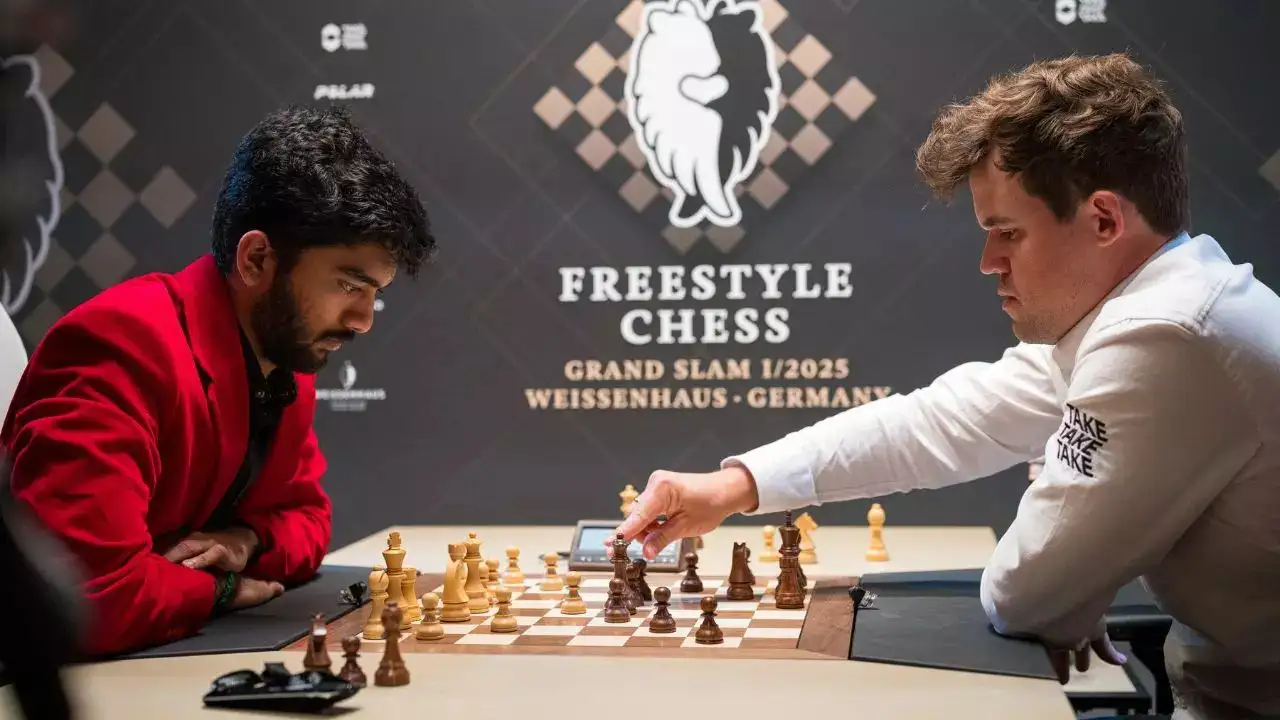
The landscape of professional chess has always been shaped by groundbreaking talents and legendary champions. The recent rise of D. Gukesh, who clinched a prestigious world championship title at a remarkably young age, has sparked intense debates among chess enthusiasts and experts alike. While this victory marks a significant milestone in Gukesh’s career, a natural question arises: Does his achievement stand shoulder-to-shoulder with the legacy of Magnus Carlsen?
Historical Context: Magnus Carlsen’s Reign
Magnus Carlsen, often revered as one of the greatest chess players in history, dominated the chess world for over a decade. His ascent to the top was marked by consistency, strategic brilliance, and a magnetic playing style that mesmerized fans globally. Carlsen’s multiple world championships and record-breaking titles set a high bar for emerging talents. His influence went beyond titles; he popularized chess, brought it to a broader audience, and transformed the sport into a modern, dynamic spectacle.
When evaluating Gukesh’s recent victory, it’s essential to consider the foundation carved by Carlsen. His unique ability to maintain dominance and innovate continuously remains an unparalleled benchmark. The question is whether Gukesh’s triumph signifies the beginning of a new era or is merely a flash in the pan in the shadow of Carlsen’s towering legacy.
Garry Kasparov’s Perspective: A Critical View
Legendary Grandmaster Garry Kasparov, whose opinions often carry weight in the chess community, has offered a nuanced critique of Gukesh’s latest achievement. Kasparov stated, “Gukesh’s world championship title is not the same as Magnus Carlsen’s or his” (source:
Kasparov emphasized that while Gukesh’s win is impressive, it lacks the context of enduring dominance that Carlsen’s reign demonstrated. Kasparov cautioned against overestimating young talents without considering the history of sustained excellence that champions like Carlsen exemplified.
Defenders and Critics: The Ongoing Debate
The criticisms from Kasparov did not go unanswered. Prominent chess figures and commentators have stepped up to defend Gukesh, arguing that comparing a young champion’s title to that of a seasoned world leader dilutes the significance of his accomplishments. For instance, Vishwanathan Anand and Susan Polgar have acknowledged Gukesh’s formidable talent and potential, suggesting that dismissing his achievement outright undermines the hard work and skill involved.
- Hindustan Times reports that Susan Polgar defended Gukesh after Kasparov’s remarks, stating that “it’s unfair to diminish his victory based on subjective comparisons.”
- Similarly, India Today highlighted Polgar’s stance that every champion’s journey is unique, and Gukesh has already shown signs of greatness that could shape his own legacy.
Another layer to this debate is the context in which these titles are won. As some critics pointed out, Carlsen’s dominance was nurtured over years of consistent performance against the world’s top players, while Gukesh’s recent win — though remarkable — is still in its nascent stages. The potential for Gukesh to establish a long-term legacy remains an open question, but his current achievement undeniably places him among the rising stars of the modern chess era.
What’s Different About Gukesh’s Victory?
Timing and Context
Gukesh’s triumph comes at a young age, marked by a flurry of records and unprecedented performances in junior and open championships. Nonetheless, it’s critical to analyze whether his victory aligns with the traditional pathways of world champions or if it signifies a shift in how the sport evolves. In recent years, the chess world has seen rapid advancements fueled by access to training resources, AI analysis, and global exposure, enabling younger players to reach high levels of competence early.
Strength of Opposition
One key factor is the strength of competition faced by Gukesh in achieving this title. While his opponents were formidable, some argue that the level of adversaries in the tournament did not match the consistency of Carlsen’s challenges. This difference fuels ongoing debates about the legitimacy and weight of his win in the grand hierarchy of chess achievements.
Playing Style and Innovation
Gukesh is praised for his inventive and flexible playing style that bodes well for his future. Yet, critics note that Magnus Carlsen’s approach was characterized by a blend of resilience, adaptability, and deep psychological preparedness that set him apart. For Gukesh to carve a similar legacy, he will need to sustain innovation and resilience over the coming years.
Conclusion: A Promising Future or a Short-Lived Spark?
In conclusion, Gukesh’s recent world championship win is undeniably a historic milestone, especially considering his age and trajectory. However, whether this achievement is comparable to Magnus Carlsen’s enduring legacy remains subjective and depends on future performances and consistency. As debates continue, one thing is clear: chess is entering an exciting new phase empowered by youthful talents like Gukesh, whose potential can redefine the sport for decades to come.
Whether Gukesh will be remembered as a legendary champion like Carlsen or a prodigious talent with a brief moment in the spotlight, only time will tell. For now, the chess world watches eagerly as this young star begins to chart his own course, promising an era filled with excitement and new records.
Final Thoughts
While comparisons between Gukesh and Magnus Carlsen may seem premature or harsh, they serve an important purpose: inspiring young players and reminding seasoned champs of the high standards that define greatness. This debate underscores that in chess, as in life, legacies are built over time — through resilience, innovation, and unwavering dedication.
For more updated news please keep visiting Hourly Prime News.