

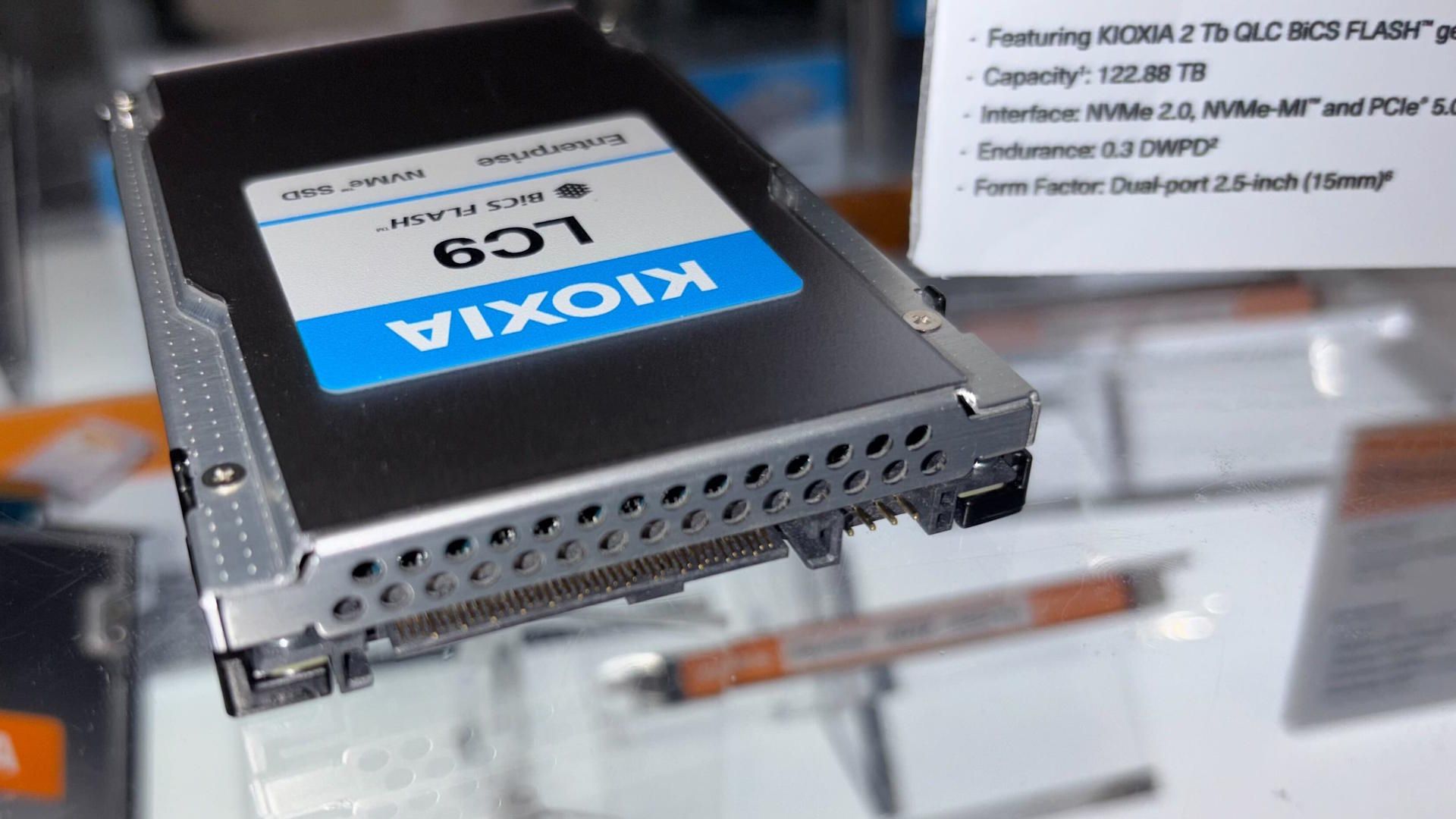
KIOXIA’s 8th Gen BiCS FLASH and PCIe 5.0 Highlights
The landscape of industrial storage solutions is undergoing a transformative shift with the recent unveiling of a groundbreaking technology by SSSTC, as highlighted by Laotian Times. This innovation marks a significant milestone in the evolution of solid-state drives (SSDs), marrying cutting-edge flash memory technology with the fastest interface available—PCIe 5.0. This development is poised to redefine performance standards, durability, and efficiency in demanding industrial environments.
Introducing the Pioneering M.2 SSD: A New Benchmark in Industrial Storage
The core of this revolutionary product is its status as the world’s first industrial-grade M.2 SSD that incorporates KIOXIA’s 8th generation BiCS FLASH™ technology alongside the latest PCIe 5.0 interface. This duo of innovations is designed to tackle the rigorous demands of industrial applications—from manufacturing automation and autonomous machinery to network infrastructure and critical data logging systems.
Unlike consumer-grade SSDs, industrial SSDs are built to withstand extreme temperatures, vibration, and read/write cycles. The introduction of this advanced SSD exemplifies the commitment of manufacturers to provide solutions that are not merely high-performing but also resilient enough for mission-critical tasks.
The Significance of KIOXIA’s 8th Generation BiCS FLASH™ Technology
Unmatched Density and Reliability
KIOXIA’s 8th generation BiCS FLASH™ employs a 3D NAND architecture that significantly enhances storage density while maintaining superior reliability. With each successive generation, BiCS FLASH has evolved to offer more bits per cell, higher endurance, and reduced power consumption. These improvements translate into benefits such as:
- Greater storage capacity in a compact form factor.
- Improved endurance to handle the demanding read/write cycles typical in industrial environments.
- Lower power consumption contributing to energy efficiency—an essential factor for embedded and remote systems.
Advanced Manufacturing and Error Correction
The manufacturing process for this generation emphasizes precision, ensuring consistent performance across multiple units. Moreover, integrated error correction algorithms enhance data integrity, essential for mission-critical operations where data corruption cannot be tolerated.
Harnessing PCIe 5.0: The New Standard in Data Transfer Speed
Why PCIe 5.0?
Peripheral Component Interconnect Express (PCIe) 5.0 is the latest evolution in high-speed interface technology. It offers double the bandwidth of PCIe 4.0, enabling SSDs to deliver unprecedented data transfer rates of up to 32 GT/s per lane. For industrial applications, this translates into:
- Faster data access and reduced latency.
- Smoother handling of large data sets, such as high-resolution imaging or real-time analytics.
- Enhanced multi-tasking capability crucial for complex industrial control systems.
Impact on Industrial Workflows
The integration of PCIe 5.0 ensures that industrial systems remain future-proof, accommodating increasing data demands. It supports the seamless operation of AI, machine learning, and edge computing applications where rapid data processing is pivotal.
Technical Features and Performance Advantages
The novel SSD brought forth by SSSTC combines these revolutionary technologies into a robust, high-performance package. Some key features include:
- Ultra-high throughput capable of handling gigabytes of data per second.
- Enhanced thermal management to prevent overheating during extended operations.
- Extended lifespan even in continuous read/write cycles.
- Compatibility with industrial systems due to its standardized M.2 form factor.
- Robust architecture suited for vibration, shock, and temperature fluctuations common in industrial environments.
Implications for the Future of Industrial Storage
This innovative SSD represents more than just speed and capacity—it symbolizes a paradigm shift toward more reliable, durable, and scalable storage solutions for industrial applications. Its deployment could lead to several transformative effects, including:
Enhanced Data Security and Integrity
With advanced error correction, encryption features, and robust hardware design, this SSD ensures that sensitive data remains secure and uncorrupted—crucial for sectors like aerospace, defense, energy, and manufacturing.
Facilitating Edge Computing and AI Integration
High-speed data transfer capabilities enable real-time analytics and AI deployment directly on the edge devices, minimizing latency and improving decision-making processes in industrial control systems.
Cost Efficiency and Reduced Downtime
Durability and reliability decrease the frequency of hardware replacements and maintenance, leading to cost savings and increased operational uptime. The SSD’s resilience makes it suitable for deployment in remote and harsh environments where serviceability is challenging.
Industry Perspectives and Future Outlook
The release of this industrial-grade M.2 SSD by SSSTC demonstrates a strategic move towards embracing next-generation interface and memory technologies. Industry experts predict that such innovations will accelerate the adoption of AI-driven automation, IoT devices, and smart manufacturing ecosystems.
Furthermore, the compatibility of this SSD with upcoming standards and its scalability make it an attractive option for OEMs seeking to develop future-proof products. As industries continue to demand higher speeds and firmer durability, these technological advancements set the stage for a new era of industrial computing infrastructure.
Conclusion: A Game-Changer in Industrial Storage Solutions
The combination of KIOXIA’s 8th generation BiCS FLASH™ and PCIe 5.0 in a single industrial M.2 SSD is a watershed moment. It not only pushes performance boundaries but also addresses the critical needs for reliability, durability, and energy efficiency in the industrial sector. This convergence of innovative memory technology with high-speed interfaces is expected to unlock new potential, foster advanced automation, and support the development of smarter, more resilient industrial systems worldwide.
As this technology continues to evolve, industry stakeholders should pay close attention to integration opportunities and emerging applications. The future is here, and it promises to be faster, safer, and more efficient than ever before.
For more updated news please keep visiting Hourly Prime News.