

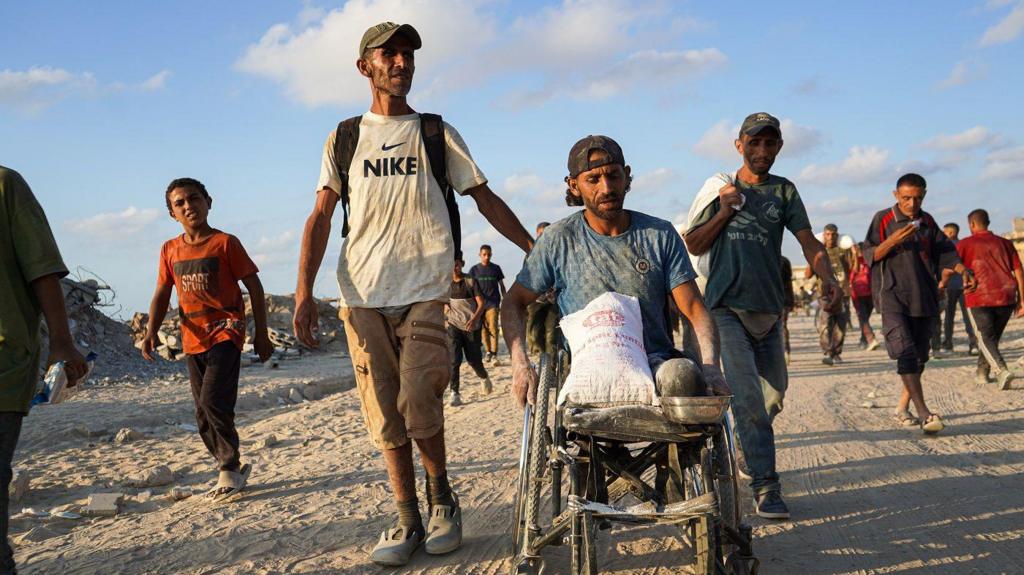
US Envoy Visits Controversial Gaza – A Tense Visit Amid Rising Controversy
In a dramatic turn of events, a prominent United States diplomatic envoy recently visited a highly contentious aid distribution point in Gaza. The site, which has garnered significant international attention, forms part of ongoing complex tensions in the region amid escalating conflicts and human rights concerns. While such visits often aim to demonstrate support for humanitarian efforts, the backdrop of recent allegations and accusations has cast a shadow over the entire mission.
The visit’s timing is particularly notable given the recent surge in accusations from various human rights groups, which have alleged serious human rights violations—including what they describe as “bloodbaths”—at multiple sites throughout Gaza. These claims have inflamed international debates surrounding Israel’s military actions, responses to Hamas activities, and the implications for innocent civilians caught in the crossfire.
Background: The Gaza Strip — A Hub of Humanitarian Crisis and Conflict
The Gaza Strip has long been a focal point for regional and international tensions, characterized by a chronic humanitarian crisis, economic hardships, and recurring violence. Over the past years, numerous reports, including those from human rights organizations, have depicted the situation as dire, with civilians bearing the brunt of ongoing military operations.
The region’s aid distribution points often serve as critical lifelines for vulnerable populations, providing essential supplies such as food, water, and medical assistance. However, these sites are frequently marred by political and military complexities, raising questions about their safety, accessibility, and the transparency of aid delivery.
The Recent Human Rights Allegations: An Escalating Issue
Claims of Violence and Human Rights Violations
Recently, prominent human rights groups have accused Israel of “bloodbaths” at various sites, including hospitals, residential areas, and aid distribution points. These allegations stem from reports of heavy artillery, airstrikes, and ground operations resulting in significant civilian casualties. While some governments and officials dispute these claims, they have nevertheless fueled international outrage and calls for independent investigations.
Human rights organizations argue that such military actions violate international laws andقاتulate the principles of proportionality and distinction. They emphasize the importance of safeguarding civilians and ensuring accountability for any violations.
The Israeli Perspective and Military Justifications
From the Israeli government’s perspective, their military operations are aimed at dismantling militant infrastructure and neutralizing security threats. Officials contend that their actions are necessary for national security and often claim that casualties are unintended collateral damage. Nonetheless, these justifications are frequently challenged by advocacy groups, which highlight the high civilian toll and the disproportionate impact on non-combatants.
The Role of International Diplomacy
US Ambassador’s Mission and Its Significance
The recent visit by the US envoy signals the importance of diplomatic efforts to address the ongoing crisis. The envoy’s presence at the aid site is intended to demonstrate support for humanitarian operations, advocate for safe access to aid, and encourage dialogue among conflicting parties.
However, critics question whether such visits merely serve diplomatic optics or contribute to meaningful change on the ground. The controversy surrounding human rights allegations adds complexity to the diplomatic narrative, forcing US officials to navigate a delicate balance between supporting Israel’s security concerns and advocating for the protection of human rights.
International Reactions and Diplomatic Challenges
Global reactions have been mixed. Some countries and international organizations have condemned violence and called for independent investigations into human rights abuses. Others have expressed unwavering support for Israel’s right to defend itself, emphasizing the need to combat terrorism.
The diplomatic challenge lies in addressing these diverging perspectives and fostering a climate where humanitarian considerations are prioritized amid security concerns. The US envoy’s visit underscores the intricate nature of these diplomatic efforts, situated at the crossroads of geopolitics, human rights, and regional stability.
The Impact of Media and Public Opinion
The role of media coverage has been pivotal in shaping international perceptions of the conflict. Reports by outlets like the BBC and human rights watchdogs have brought attention to alleged atrocities, fueling global outrage and pressure for accountability.
Public opinion worldwide remains deeply divided, with some communities rallying behind Israel’s security and others condemning the violence and advocating for the rights of Gaza’s civilians. The dissemination of verified information versus propaganda plays a critical role in shaping diplomatic responses and policy decisions.
Looking Ahead: The Path Toward Resolution
Efforts to De-escalate Tensions
De-escalation remains one of the most urgent priorities. International actors, including the United States, have called for ceasefires, humanitarian corridors, and renewed negotiations to address the root causes of the conflict.
Key strategies include:
- Establishing safe zones and humanitarian corridors for civilians
- Facilitating dialogues between conflicting parties
- Ensuring accountability through independent investigations into alleged violations
- Addressing underlying political issues such as sovereignty, governance, and security arrangements
The Role of International Law and Justice
Legal mechanisms, including the International Criminal Court (ICC), play a crucial role in holding actors accountable and deterring future violations. The international community continues to debate the legitimacy and scope of investigations, emphasizing the importance of upholding international law and protecting human rights.
Conclusion: Navigating a Complex and Fragile Situation
The recent US envoy’s visit to the Gaza aid site symbolizes an ongoing effort to bridge diplomatic gaps amid profound humanitarian crises and contentious human rights accusations. While such diplomatic gestures are vital, they must be coupled with tangible actions to address root causes, ensure accountability, and protect civilians.
The path toward lasting peace and stability in Gaza and the broader region remains fraught with challenges. Nonetheless, sustained international engagement, transparent investigations, and unwavering commitment to human rights are essential for fostering hope and building a future where dignity and security can be restored for all parties involved.
In the meantime, monitoring developments and supporting efforts aimed at de-escalation are crucial. Only through coordinated, compassionate, and lawful approaches can the cycle of violence be broken and a more hopeful horizon emerge for Gaza and beyond.
For more updated news please keep visiting Hourly Prime News.