

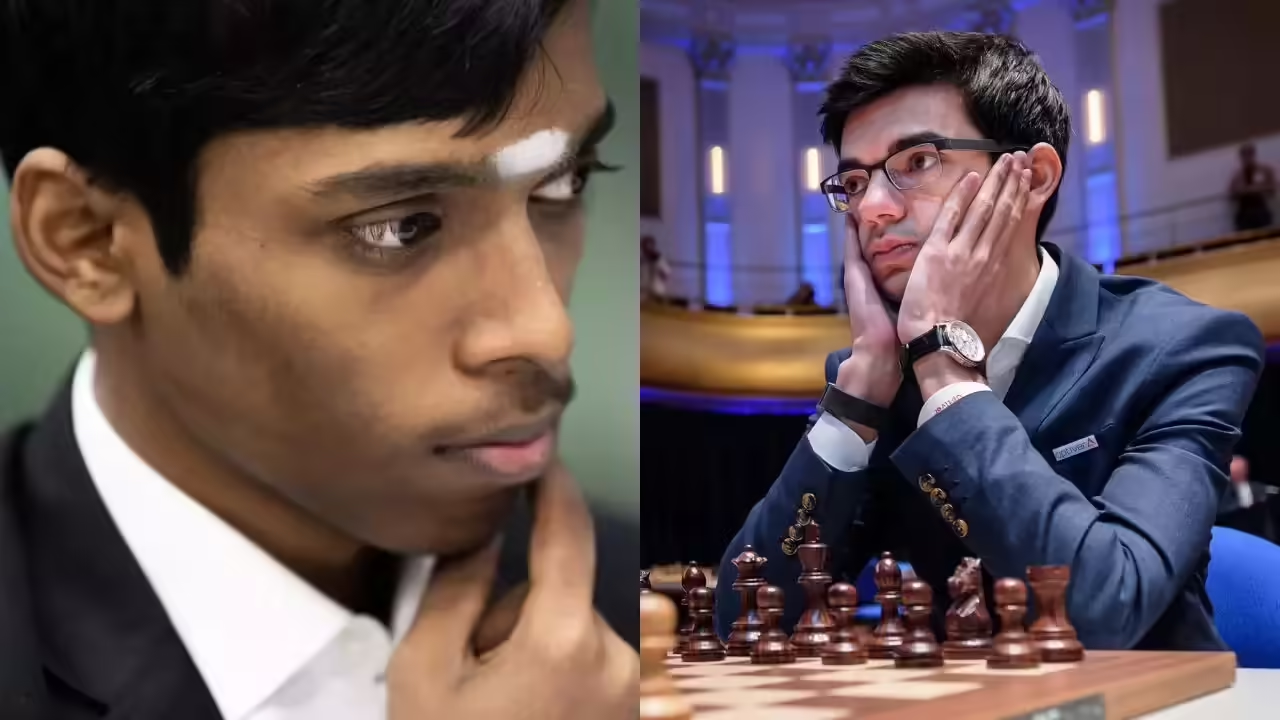
R Praggnanandhaa’s Rise to the Top Sparks Debate: Anish Giri’s Reaction Sparks Controversy
The world of chess is often characterized by its reverence for tradition and the quiet dignity of its players. However, recent developments have stirred the waters, raising eyebrows and prompting discussions beyond the 64 squares of the board. The focal point? The meteoric rise of Indian prodigy R Praggnanandhaa to become the top-ranked junior chess player, and the reaction of Dutch grandmaster Anish Giri, who dismissively labeled the achievement as “totally pointless.” This commentary delves into the background of this controversy, its implications for the chess community, and what it reveals about the evolving landscape of competitive chess.
The Rise of R Praggnanandhaa: A New Dawn in Junior Chess
Breaking Barriers and Setting New Records
R Praggnanandhaa, born in India, has been a figure of immense promise since his early years. With a strategic mind and relentless dedication, he quickly ascended the ranks and made a name for himself on the international stage. Recently, his feat of emerging as the top-ranked junior chess player garnered significant attention from media outlets and chess aficionados alike.
This milestone was celebrated by many who see it as a testament to the shifting centers of chess excellence—from traditionally dominant European and Russian players to the burgeoning talents from Asia, especially India. Praggnanandhaa’s accomplishments underscore the increasing competitiveness of young players across the globe, fueled by advances in training, access to digital resources, and a growing chess culture in India.
Impacts on the Chess Landscape
- Inspiration for Young Players: Praggnanandhaa’s success inspires thousands of aspiring chess enthusiasts in India and beyond.
- Shift in Competitive Power Dynamics: His rise challenges the historically Western-centric domination of junior rankings.
- Increased Media Attention: Such achievements draw more attention from mainstream media, bringing chess into popular discourse.
Anish Giri’s Reaction: An Unexpected Dismissal
The Controversial Statement
Instead of embracing the celebratory mood surrounding Praggnanandhaa’s accomplishment, Dutch no. 1 Anish Giri reacted with apparent disdain, describing the achievement as “totally pointless.” Such a dismissive statement astonished many, as it seemed to undermine the hard work and dedication involved in reaching such heights at a young age.
Context and Possible Motivations
Giri’s reaction has sparked widespread debate, with some speculating that it stems from a sense of rivalry, jealousy, or perhaps a misunderstanding of what such milestones represent. Others see it as a reflection of a broader attitude within the global chess community—where veteran players sometimes struggle to accept the rapid rise of newcomers or view such achievements through a lens of skepticism.
It is crucial to note that Giri’s career has been marked by consistent performance and strategic prowess; however, dismissing a young prodigy’s success as “pointless” may be viewed as out of touch with the sport’s evolving dynamics.
The Broader Implications for Chess Culture
Generational Divide and Attitudes
The reaction highlights a potential generation gap within the chess community. Older players, who experienced fewer opportunities and less access to training resources, might view rapid progress differently than the new generation, which benefits from digital coaching, online tournaments, and global exposure.
Recognition and Respect in the Sport
- Respect for Young Talent: The sport must evolve to recognize and uplift young talents rather than dismiss their accomplishments.
- Fostering Healthy Competition: Instead of disparaging peers, seasoned players should aim to mentor and inspire.
- Reframing Success: Achievements like Praggnanandhaa’s should be seen as progress and renewal, not as threats or trivial pursuits.
Public and Media Reactions: Divided Opinions
The media, including prominent outlets like The Times of India, have shown a spectrum of responses, from support for Praggnanandhaa’s achievements to criticism of Giri’s comments.
What Does This Mean for the Future of Chess?
Embracing New Talents and Shifting Paradigms
As chess continues to globalize, with young stars emerging from different parts of the world, the sport needs to recalibrate its appreciation for achievement. The dismissive reaction of a seasoned player like Giri may be viewed as an anomaly or a symptom of resistance to change.
Encouraging an environment of mutual respect and admiration for rising talents will be crucial in nurturing the next generation of grandmasters and maintaining the sport’s integrity.
Fostering a Growth-Oriented Culture
Chess, like any sport or intellectual pursuit, thrives on innovation, fresh perspectives, and the celebration of progress. Recognizing that achievements by young players like Praggnanandhaa are milestones—not “pointless” efforts—will inspire more youthful engagement and broaden the sport’s appeal.
Conclusion: Moving Forward with Respect and Inspiration
The controversy surrounding R Praggnanandhaa’s ascent and Anish Giri’s reaction serves as a microcosm of broader themes within competitive sports: the tension between tradition and innovation, the importance of mutual respect, and the need to embrace change. As the chess community grapples with these dynamics, it is essential to remember that each new achievement — especially by young talents — contributes to the rich tapestry of the game.
Ultimately, the sport is best served when experienced with an open mind and a spirit of encouragement. Rather than dismissing greatness as “pointless,” we should celebrate it as a sign of the sport’s vibrant, evolving nature.