

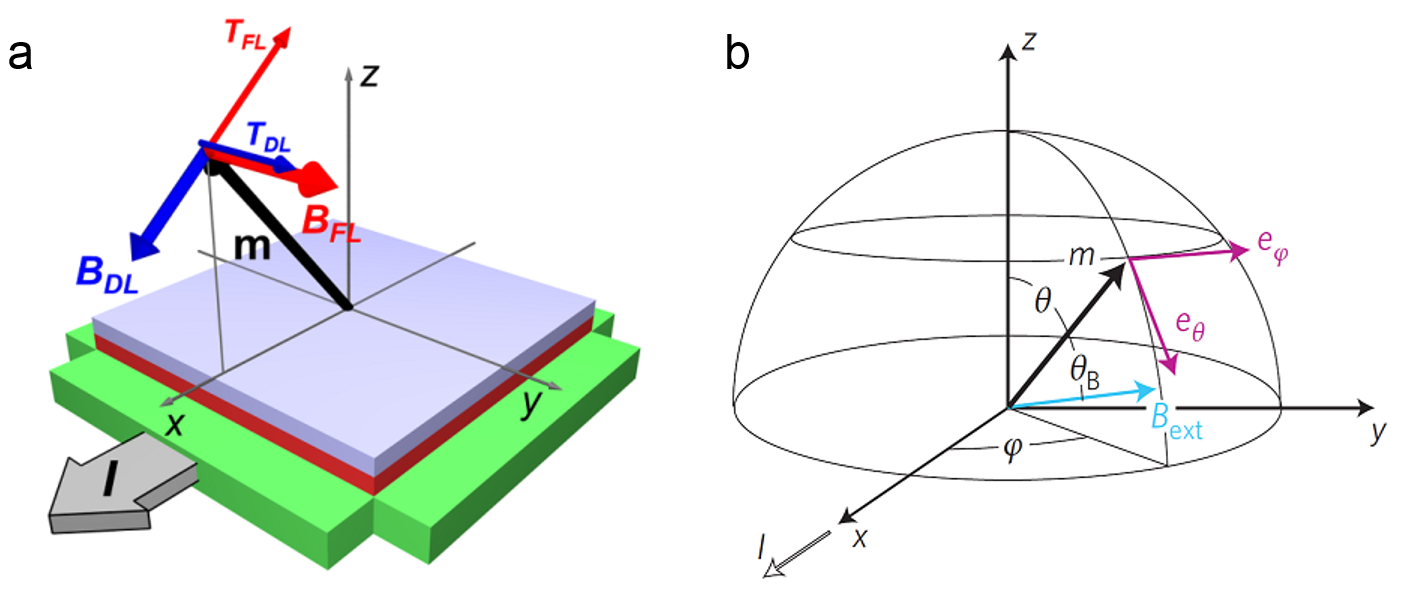
Recent advancements in condensed matter physics have ushered in a transformative era with the introduction of a groundbreaking **theoretical framework** that effectively clarifies longstanding confusions surrounding spin-orbit interactions in solid materials. Traditionally, the concept of spin-orbit coupling (SOC) has been pivotal in understanding various phenomena, from topological insulators to quantum spin Hall effects. However, decades of research revealed ambiguities and inconsistent interpretations, hindering deeper comprehension and practical applications. The release of this innovative framework marks a significant milestone, unifying disparate physics concepts and paving the way for novel technological innovations.
Background: The Complexity of Spin-Orbit Interactions
Spin-orbit interactions are fundamental in the behavior of electrons within solid materials. They are interactions between an electron’s spin (intrinsic angular momentum) and its motion around atomic nuclei, an effect induced by electromagnetic forces. Although understanding SOC is crucial, the theoretical landscape has been clouded by various interpretations and models, often unique to specific materials or phenomena.
Some key issues that have historically complicated the field include:
- Multiple theoretical models: Various approaches, like the Rashba and Dresselhaus models, have offered different perspectives but lacked comprehensive unification.
- Context-dependent behaviors: SOC effects vary significantly based on material structure, dimensionality, and external fields, creating ambiguities in predictions.
- Inconsistent interpretations: Different research groups sometimes used conflicting definitions, leading to confusion among the scientific community.
Introducing the New Theoretical Framework
A Unifying Approach
The recently proposed framework aims to harmonize the understanding of spin-orbit coupling by establishing a unified mathematical model applicable across a broad range of solid-state systems. This model simplifies complex interactions, providing clear insights regardless of material specifics, which marks a departure from earlier fragmented approaches.
This framework is rooted in advanced quantum mechanical formulations that explicitly incorporate the **intrinsic** and **extrinsic** components of SOC. It effectively separates the various contributions to spin-orbit effects, allowing researchers to analyze and predict behaviors consistently across different contexts.
Core Elements of the Framework
The innovative aspects of this framework include:
- Clear differentiation between bulk and surface effects: The framework emphasizes how SOC manifests differently in the material’s interior versus at the surfaces or interfaces.
- Unified mathematical expressions: It introduces a comprehensive Hamiltonian that encapsulates all spin-orbit interactions, streamlining calculations and interpretations.
- Inclusion of external influences: Factors such as electric fields, magnetic fields, and strain are seamlessly integrated into the model, making it versatile for real-world applications.
- Compatibility with emerging quantum materials: The framework is designed to adapt easily to complex systems like topological insulators, Weyl semimetals, and 2D materials such as graphene and transition metal dichalcogenides.
Implications for the Field of Solid-State Physics
Resolving Long-Standing Confusions
The development of this comprehensive framework is a breakthrough because it addresses and dissolves prior ambiguities that have hindered theoretical and experimental progress. Researchers can now interpret phenomena consistently, leading to more accurate characterizations of materials. This in turn accelerates the development of devices leveraging SOC effects, such as spin transistors, quantum computers, and sensors.
Facilitating Material Design and Discovery
With a unified understanding, scientists are better equipped to engineer materials with tailored SOC properties. For instance, under this new paradigm, predicting how a material will behave under specific conditions becomes more straightforward, thus fostering innovation in designing next-generation electronic and spintronic devices.
Advancing Technological Applications
The precise control and manipulation of spin-orbit effects are central to emerging technologies, especially in the realms of quantum computing and spintronics. The new framework provides the theoretical backbone to optimize these effects, leading to devices with enhanced efficiency, robustness, and new functionalities.
Broader Impact and Future Prospects
Interdisciplinary Significance
The unification brought about by this framework extends beyond condensed matter physics, influencing fields such as materials science, nanotechnology, and quantum information science. It fosters cross-disciplinary collaborations aimed at harnessing SOC phenomena for practical use cases.
Stimulating New Research Directions
Many questions that previously lacked clear pathways now find resolutions within this framework. Researchers are now exploring unexplored regimes and materials, potentially discovering new topological phases or exotic quasiparticles driven by well-understood spin-orbit mechanisms.
Conclusion
The unveiling of this innovative framework signifies a paradigm shift in how the physics community comprehends spin-orbit interactions in solids. By establishing a unified, versatile, and precise model, it not only clears up decades of confusion but also unlocks new potentials for technological advancement. As the field progresses, this foundational tool will undoubtedly inspire a multitude of discoveries and applications in the rapidly evolving landscape of condensed matter physics and materials engineering.
**In essence, this development marks a crucial step toward mastering the quantum intricacies of materials and harnessing their full potential for tomorrow’s technologies.**
For more updated news please keep visiting Hourly Prime News.