

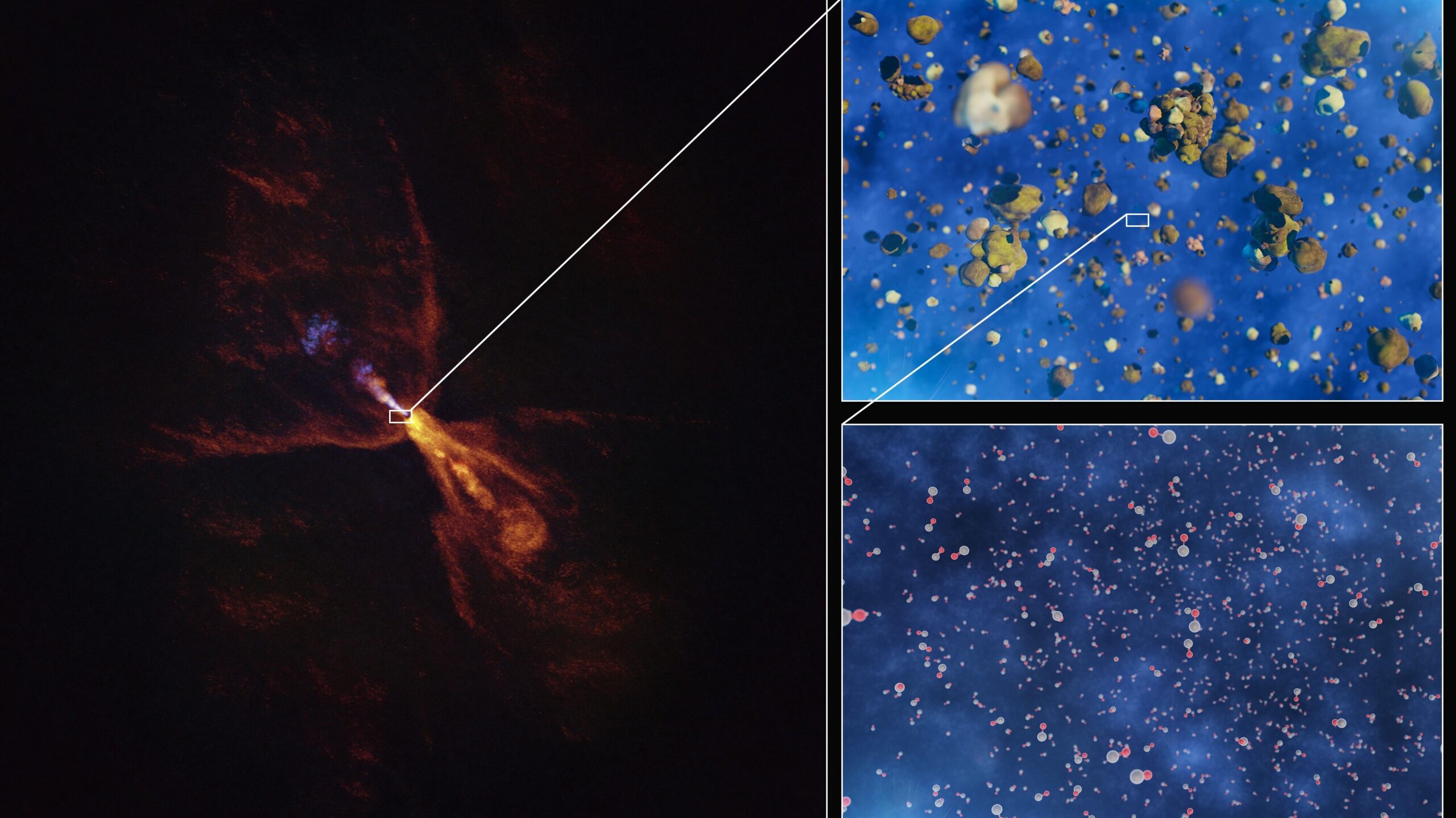
In a monumental breakthrough in astrophysics, astronomers have managed to capture rare, detailed images of a **newborn planet** located approximately 1,300 light-years from Earth. This discovery not only enriches our understanding of planetary formation but also provides an awe-inspiring visual glimpse into the earliest evolutionary stages of a planet.
Using advanced telescopic technology and imaging techniques, scientists have observed a young planetary body emerging from a protoplanetary disk—the dense matter surrounding a young star. These images reveal a planetary body still enshrouded in the residual dust and gas that birthed it, offering unprecedented insight into the formative processes that give rise to planets like our own Earth.
Significance of These Observations
The significance of witnessing such an event cannot be overstated. It validates longstanding theories about **planetary formation** and allows astronomers to study the mechanisms involved firsthand. For instance, the captured images suggest the planet is in the early stages of accumulation, with material still actively coalescing under gravitational forces.
Moreover, these observations contribute to understanding how planetary systems evolve over time, shedding light on the environments that might be conducive to the development of life. Recognizing the embryonic phase of planets opens doors for further research into the conditions that foster habitable worlds outside our solar system.
Technological Marvels Making It Possible
The ability to observe a planet so far away has been made possible through innovations such as the use of adaptive optics, high-contrast imaging, and space-based observatories like the Atacama Large Millimeter/submillimeter Array (ALMA). These tools enable astronomers to overcome the challenges posed by cosmic dust and the immense distances involved.
Furthermore, recent advancements in image processing, including machine learning algorithms, have significantly enhanced the resolution and clarity of these images. This amalgamation of technology and scientific ingenuity has revolutionized our capacity to view the universe’s youngest planetary systems.
The Broader Implication: First-Ever Observation of a Planet’s Birth
Perhaps the most groundbreaking aspect of this discovery is that it marks the **first time** that astronomers have directly observed a planet in the process of formation in real-time. While previous theoretical models have predicted such phenomena, actual visualization brings certainty and depth to our understanding of planetary genesis.
This milestone has been supported by a series of observations and videos captured by researchers, revealing the dynamic and turbulent environment within the protoplanetary disk. These images showcase the planet’s developing core and the surrounding gas inflows, painting a vivid picture of the cosmic nursery.
Emerging Evidence of Dust and Refractory Material
Compounding interest in such observations is the detection of refractory solid condensations within the disk. These are dense regions of dust and mineral-rich material that play a crucial role in planet formation, acting as building blocks for planetary cores. Studies, such as those reported in *Nature*, highlight the intricate processes where dust particles undergo condensation, sticking together, and gradually growing into larger bodies.
The presence of these refractory materials indicates that even in their infancy, planetary systems are complex, with chemical and physical processes occurring at a rapid pace. Such findings could potentially inform us about the composition of planets in these systems and the likelihood of similar planets developing atmospheres or even, in the distant future, hosting life.
A Quasi-Real-Time View: Observing a Planet at Its First Light
This discovery is akin to a **cosmic time capsule**, where astronomers witness the **dawn of a new planetary system**, providing invaluable clues about the initial conditions that shape planetary ecosystems. The visualization of a protoplanet still embedded within its natal disk offers a snapshot of the early stages—short-lived in cosmic terms but astronomically illuminating for our understanding.
In addition, the first videos released by space agencies like ESO.org provide a breathtaking view of the planetary accretion process, allowing both scientists and enthusiasts to marvel at the ongoing universe creation saga. Watching a planet’s birth in real-time beyond our solar system redefines our conception of cosmic evolution.
Implications for Future Research and Exploration
This detection encourages the scientific community to focus on **time-sensitive observations** of other young stellar objects**. It opens the possibility of directly witnessing multiple planet formation events and comparing different stages of planetary birth across various systems.
Moreover, understanding the process finer helps refine models predicting planetary characteristics, such as atmosphere formation, surface development, and potential habitability zones. In essence, every new image and video enrich our cosmic library, bringing us closer to understanding the origin of worlds beyond our solar neighborhood.
Conclusion
The remarkable images and videos that capture the birth of a planet 1,300 light-years away stand as testament to human ingenuity and the relentless pursuit of knowledge. They unlock a universe of possibilities, revealing the intricate ballet of dust, gas, and gravity that creates celestial bodies. As technology advances, our capacity to witness these cosmic phenomena will only grow, promising an exciting future of discovery and understanding.
For more updated news please keep visiting Hourly Prime News.