

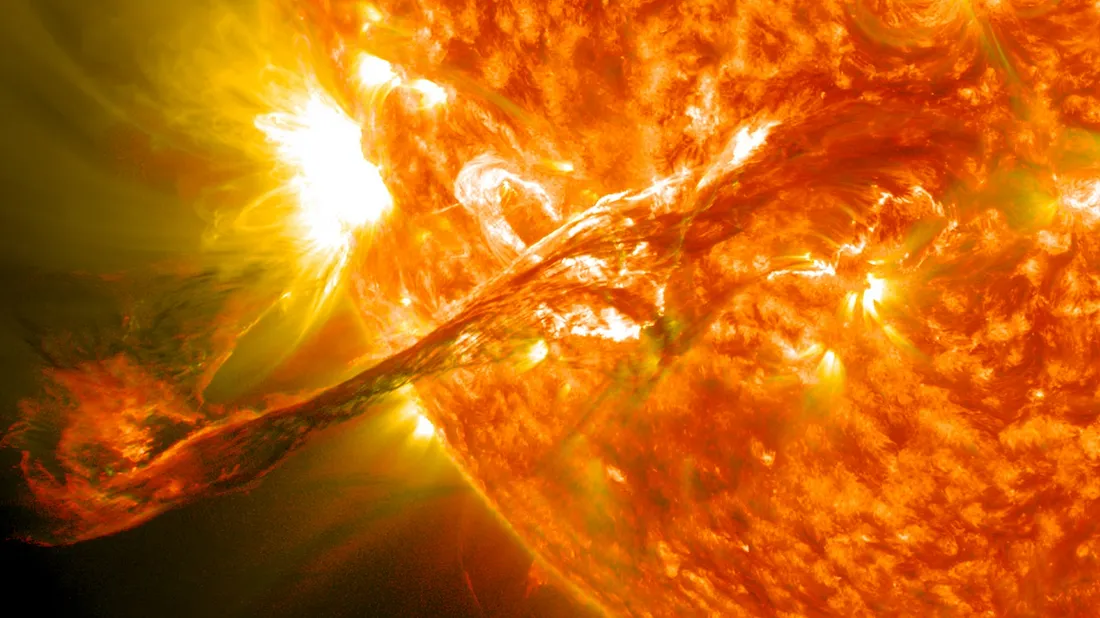
The recent bursts of solar activity observed in May 2024 have grabbed the attention of scientists, astronomers, and space enthusiasts worldwide. These intense solar eruptions, often known as solar flares and coronal mass ejections (CMEs), have the potential to disrupt satellite operations, communication systems, and even power grids on Earth. In response to this phenomenon, the Indian Institute of Astrophysics (IIA) team has undertaken a meticulous analysis to decode the underlying causes of these eruptions, shedding light on the complex dynamics of our sun. This comprehensive review aims to synthesize their findings, providing a detailed understanding of what triggered the solar activity in May 2024 and what it signifies for future solar cycles.
The Complexity of Solar Eruptions
Solar eruptions are among the most energetic events in our solar system. They occur when the magnetic energy stored in the sun’s atmosphere is suddenly released, propelling charged particles into space. While scientists have studied these phenomena for decades, each eruption carries unique signatures that make prediction challenging. The May 2024 eruptions followed an unusual pattern, suggesting shifts in the sun’s magnetic environment that prompted the IIA team to investigate deeper.
Insights from the IIA Research
According to the IIA team decodes reason behind May 2024 solar eruptions, the experts emphasize that the primary drivers of these eruptions are rooted in the sun’s complex magnetic behaviors.
Magnetic Field Dynamics and Solar Cycle Phases
The sun’s magnetic field plays a pivotal role in solar activity. During certain phases of its approximately 11-year cycle, magnetic field lines become twisted and entangled, setting the stage for eruptions. The IIA findings highlight that in May 2024, the sun was transitioning into a more active phase of its cycle. However, what made these eruptions particularly noteworthy was the unusual intensity and the variety of magnetic configurations observed.
The key factors identified include:
- Escalating complexity in magnetic loops and sunspot groups.
- Increased magnetic shear and flux emergence in specific regions of the sun’s surface.
- Rapid changes in magnetic polarity, indicating instability.
The combination of these elements created an environment ripe for explosive solar events. Such insights are crucial because they help refine forecasts and prepare Earth-based infrastructure for potential disruptions.
Role of Sunspots and Magnetic Reconnection
A significant trigger for solar eruptions is the presence of large sunspots with intense magnetic fields. The IIA research points out that during May 2024, a cluster of sizable sunspots formed, which became focal points for magnetic reconnection—the process where magnetic field lines break and reconnect, releasing vast amounts of energy. The reconnection events observed corresponded temporally with the recorded solar flares, confirming their causative link.
What Does This Mean for Earth?
The implications of such intense activity cannot be overstated. Strong CMEs following these eruptions have the potential to reach Earth in a matter of days, possibly affecting:
- Satellite communications and navigation systems.
- Power infrastructure, risking outages.
- Astronaut safety during space missions.
- Radio frequency operations around the globe.
Understanding the triggers of these eruptions enables space agencies and power grid authorities to better prepare and potentially mitigate some of the adverse effects.
Future Outlook and Monitoring Strategies
The IIA experts advocate for enhanced solar monitoring techniques, including real-time magnetic field measurements and advanced computational models. By continuously analyzing magnetic flux emergence and sunspot evolution, scientists can predict the likelihood of future eruptions with greater accuracy. The emergence of machine learning tools adds promising avenues for early warning systems.
Moreover, the research underscores the importance of international collaboration, data sharing, and developing resilient infrastructure capable of withstanding space weather impacts.
Conclusion
The May 2024 solar eruptions stand as a testament to the dynamic and unpredictable nature of our sun. Thanks to the dedicated efforts of the IIA team, we are now better equipped to understand the magnetic intricacies that lead to these energetic outbursts. Their findings not only deepen our scientific knowledge but also pave the way for improved forecasting and safeguarding technological assets on Earth.
As solar activity continues to evolve, ongoing research and vigilant monitoring are essential. The sun’s behavior remains a compelling puzzle, and with each discovery, we move closer to unraveling its mysteries.
For more updated news please keep visiting Hourly Prime News.