

China’s Electric Vehicle Surge and Its Global Impact
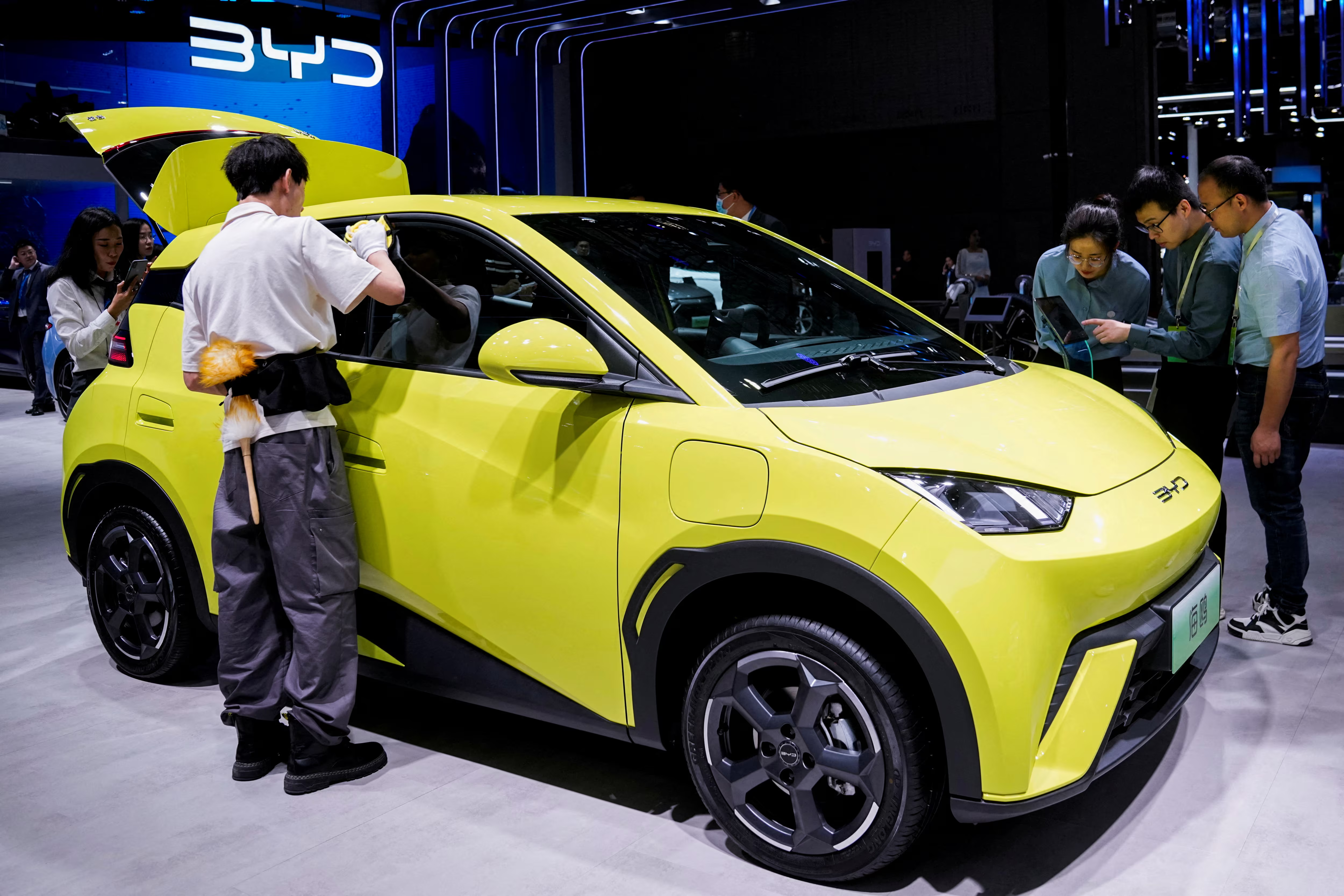
The global automotive industry is witnessing a seismic shift driven by China’s rapid expansion in electric vehicle (EV) production. Spearheaded by industry giants like **BYD**, China has become the world’s leading EV manufacturing hub, flooding international markets with competitively priced, technologically advanced vehicles. This surge is not just a regional phenomenon; it’s significantly influencing global car prices, pushing them downward and reshaping consumer expectations worldwide.
In this comprehensive analysis, we explore how China’s EV boom is transforming the automotive landscape, the strategic moves by Chinese automakers, and the resulting ripple effects on car prices across the globe.
The Rise of Chinese EV Manufacturers: A Closer Look at BYD and Others
China’s electric vehicle industry has grown exponentially over the past decade. Companies like **BYD**, NIO, Xpeng, and Li Auto have emerged as dominant players, integrating cutting-edge technology with cost-effective manufacturing processes.
**BYD’s Strategic Edge**
– **Massive Production Scale**: BYD boasts one of the largest EV manufacturing capacities globally, allowing it to produce vehicles at a scale that drives down costs.
– **Vertical Integration**: BYD controls much of its supply chain—from batteries to vehicle assembly—enhancing efficiency and cost savings.
– **Diverse Portfolio**: From affordable compact EVs to luxury models, BYD caters to a broad consumer base, increasing its global footprint.
**Other Notable Chinese EV Players**
– **NIO**: Known for premium EVs with innovative features like swappable batteries.
– **Xpeng**: Focuses on smart, connected EVs tailored for tech-savvy consumers.
– **Li Auto**: Specializes in plug-in hybrid EVs with competitive pricing.
This robust ecosystem has allowed Chinese automakers to flood markets with a variety of EV options at prices often significantly lower than their Western counterparts.
Market Penetration: How China Is Flooding the World with EVs
According to a Bloomberg report, China’s EV exports have surged dramatically in recent years. Led by BYD’s expanding international footprint, Chinese automakers are exporting millions of vehicles to markets such as Europe, Southeast Asia, Africa, and Latin America.
**Key strategies fueling this surge include:**
– **Aggressive Export Policies**: Governments incentivize exports and improve logistics networks.
– **Competitive Pricing Strategies**: Chinese EVs are often priced 20-40% lower than comparable imports, making them attractive options for budget-conscious consumers.
– **Local Market Domination**: Domestically, Chinese consumers benefit from a vibrant EV ecosystem that drives down manufacturing costs through high volume sales.
This flood of affordable EVs is exerting downward pressure on local prices in target markets, forcing domestic manufacturers to lower prices and innovate competitively.
Technological Innovation and Cost Efficiency: The Chinese Advantage
One of the key drivers behind China’s ability to undercut global car prices is its focus on technological innovation paired with manufacturing efficiency.
**Innovations driving down costs include:**
– **Advanced Battery Technology**: Chinese companies have invested heavily in battery chemistry and manufacturing, reducing costs and improving range.
– **Smart Integration**: Incorporation of AI and IoT features at a mass scale, making affordable EVs technologically competitive.
– **Manufacturing Automation**: Extensive use of robotics and AI in factories has lowered production costs significantly.
By continuously investing in research and development, China is creating EV components that are not only cheaper but also more reliable, facilitating mass production at a reduced cost—translating into lower prices for consumers worldwide.
Global Market Responses and Price Impacts
The influx of affordably priced Chinese EVs is creating ripple effects in global markets:
1. Competitive Pressure on Western Automakers
Western manufacturers like Tesla, Volkswagen, and General Motors face increased competition from Chinese imports. To sustain their market share, they are compelled to lower prices, offer better incentives, or accelerate innovation.
2. Lower Consumer Prices
With more affordable options flooding the market, consumers worldwide now have access to EVs at a significantly reduced price point. This democratization of EV ownership accelerates the adoption rate, further intensifying price competition.
3. Impact on Traditional Internal Combustion Engine (ICE) Vehicles
Lower EV prices are also influencing the value proposition of traditional cars, leading to a decline in ICE vehicle sales and encouraging a faster transition toward electrification.
The Environmental and Economic Implications
The Chinese EV boom is not just a matter of economics but also environmental significance. As cheaper EV options replace internal combustion engine vehicles, global carbon emissions could decrease substantially.
**Economic benefits include:**
– **Job creation** within China’s EV supply chains and export sectors.
– **Cost reductions** in EV ownership worldwide, making sustainable transportation more accessible.
However, this rapid growth poses challenges such as market saturation, intellectual property concerns, and trade tensions, which could influence global trade policies moving forward.
Future Outlook: What’s Next for the Global Car Market?
Looking ahead, China’s EV expansion is likely to continue influencing global car prices. Several trends suggest an ongoing democratization of EV ownership:
– **Increasing investments in battery recycling and second-life applications** will further reduce costs.
– **Growth in charging infrastructure and government incentives** worldwide will boost EV adoption, amplifying the impact of Chinese exports.
– **Strategic partnerships and collaborations** between Western automakers and Chinese firms may foster innovation and competitive pricing.
Moreover, as Chinese automakers expand into new markets with strategically priced EV offerings, traditional automakers must innovate rapidly to maintain relevance. The competitive landscape will be characterized by a race to produce affordable, high-quality electric vehicles.
Conclusion: A New Era in Global Automotive Pricing
China’s EV boom, led by industry leaders like BYD, is undeniably reshaping the global automotive industry. Through massive production scale, technological innovation, and aggressive export strategies, Chinese automakers are flooding international markets with affordable EV options. This influx is compelling other countries’ automakers to lower prices and embrace electrification—a trend that promises to make EVs more accessible and accelerate the global transition to sustainable transportation.
As the landscape continues to evolve, consumers worldwide stand to benefit from increased affordability, better technology, and a cleaner environment. The next decade will be pivotal in determining whether the Chinese EV revolution can sustain its momentum and how it will influence global car prices in the years to come.
Final Thoughts
The Chinese EV industry’s rapid growth and export strategy demonstrate how innovation and large-scale manufacturing can disrupt established markets. For consumers, this means more choices, lower prices, and a faster transition toward sustainable mobility. For manufacturers, it signals the need for agility, innovation, and strategic partnerships to stay competitive in an increasingly electric future.
In summary: China’s rise in EV manufacturing and export prowess is a catalyst for lowering global car prices and pushing the entire industry towards a cleaner, more accessible future.
For more updated news please keep visiting Hourly Prime News.